
How Provisio Leverages AI to Safely Deliver Salesforce Projects Faster
How Human Services Leaders Can Transform Technology Funding Strategy in the Age of AI
Blackbaud CRM Renewals in 2026: A Strategic Guide for Human Services Nonprofits
Overcoming 20 Years of Tech Frustration: How Mental Health Association of Oklahoma Unlocked Data to Stave Off Financial Crisis

Top 5 Sessions for Human Services Leaders at Dreamforce 2026
Provisio Ranks No. 4671 on the 2026 Inc. 5000 List
7 AI Readiness Insights for Human Services
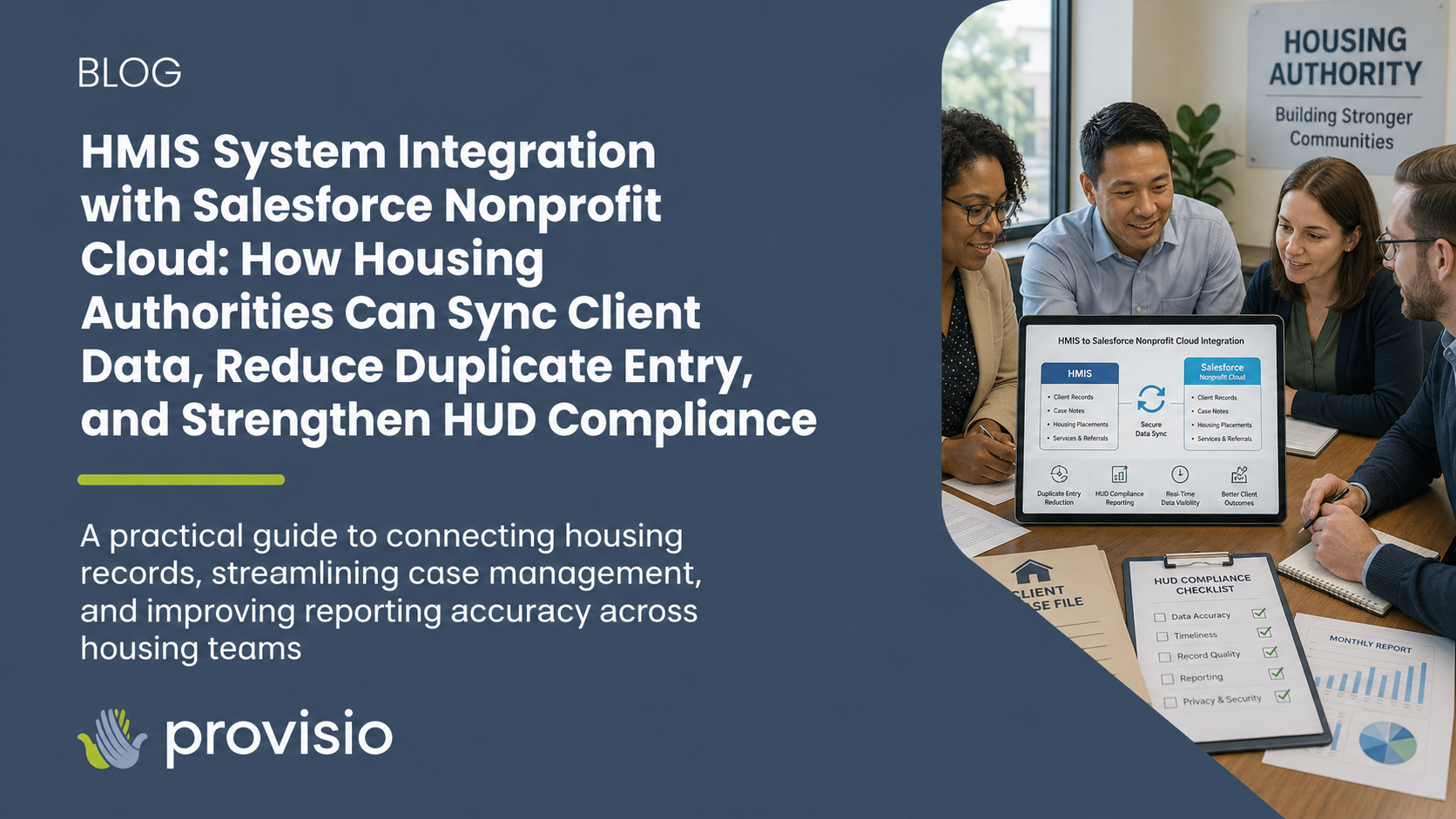
HMIS System Integration with Salesforce Nonprofit Cloud: How Housing Authorities Can Sync Client Data, Reduce Duplicate Entry, and Strengthen HUD Compliance
Housing authorities, Continuums of Care, homeless services providers, and public-sector housing teams all rely on accurate data to understand client needs, coordinate services, report outcomes, and meet compliance requirements. But when housing teams use one platform for case management, another for reporting, and a separate HMIS system for HUD-related data, staff can quickly become overwhelmed by duplicate entry, inconsistent records, and disconnected workflows.
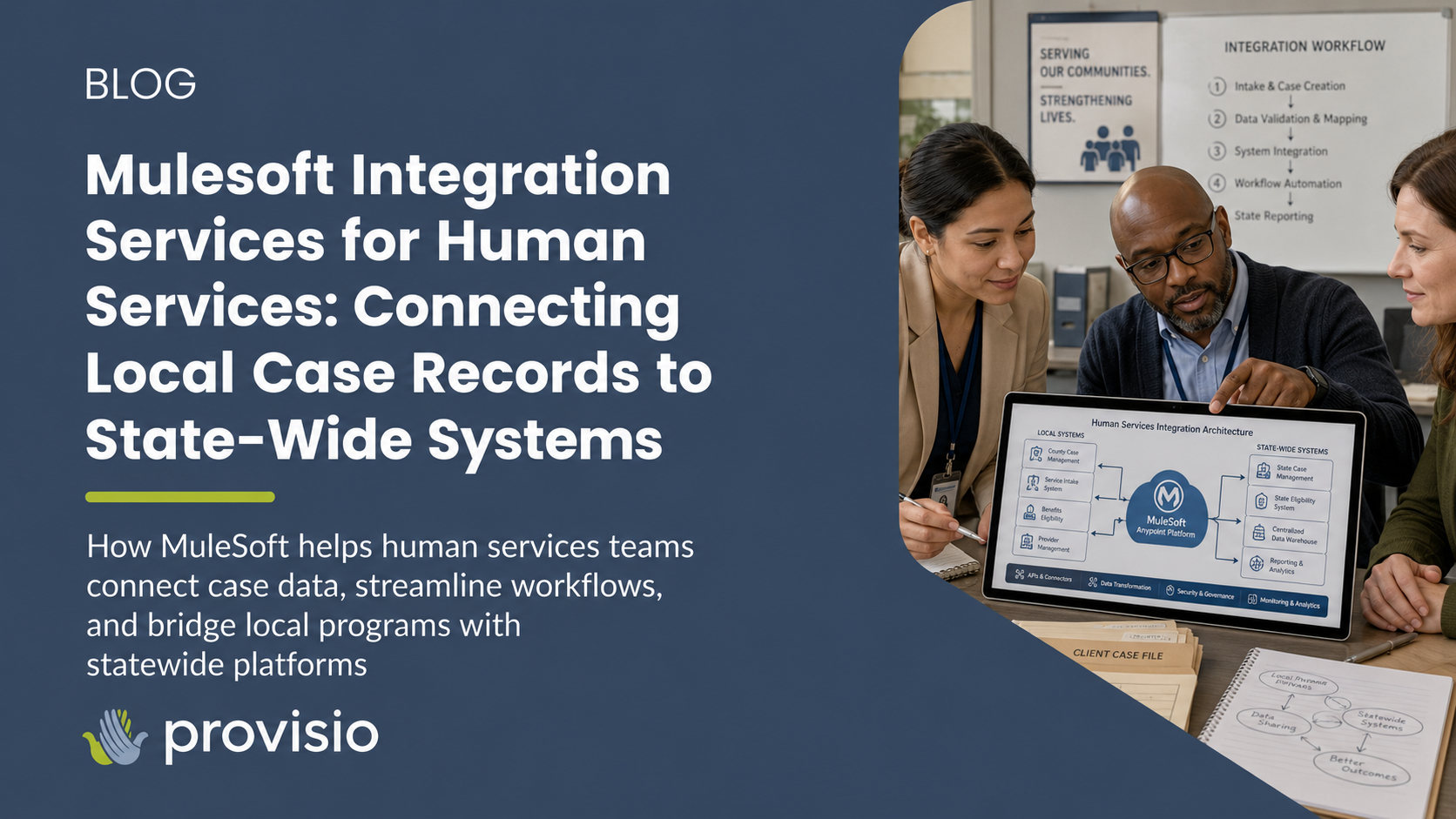
Mulesoft Integration Services for Human Services: Connecting Local Case Records to State-Wide Systems
Case records, eligibility information, program referrals, service history, assessments, outcomes, grant reporting, and compliance documentation all need to move securely across systems. Yet for many nonprofits, local agencies, and state and county departments, that information is still scattered across disconnected platforms. A Mulesoft integration can help solve this challenge by connecting local case records to state-wide systems, improving interoperability, reducing manual work, and creating a stronger foundation for data-driven service delivery.
Data Analysis for Nonprofits: How Mission-Driven Organizations Can Turn Data Into Measurable Impact
When used strategically, data analysis helps mission-driven organizations move beyond basic reporting and turn information into measurable impact. It allows teams to track goals, improve funding conversations, strengthen programs, identify service gaps, and tell a clearer impact story to stakeholders.
From Spreadsheets to Smart Systems: A Nonprofit Leader’s Guide to Successful Data Modernization Strategy
A thoughtful data modernization strategy helps nonprofits move beyond disconnected spreadsheets and legacy systems toward integrated, secure, AI-ready technology that supports better decisions, stronger compliance, and more coordinated services. For organizations serving communities across housing, shelter, workforce development, behavioral health, aging care, early childhood, and other human services areas, modernizing data is not just a technical upgrade. It is a mission investment.
The Best Salesforce Data Management Tools for Cleaner CRM Data
Salesforce offers a wide range of native and connected tools that help organizations import, clean, protect, integrate, back up, and activate their data. The right mix depends on your data volume, compliance needs, reporting goals, and the complexity of your service delivery model. Below is a practical overview of the most important Salesforce data management tools and how each one supports cleaner, more useful CRM data.
What Does a Salesforce Implementation Consultant Do? A Guide for Growing Businesses
Salesforce can transform the way nonprofits and government organizations manage programs, serve communities, coordinate teams, and report on outcomes. But launching Salesforce the right way takes more than choosing the right tools. It requires a clear strategy, well-designed workflows, clean data, thoughtful change management, and a system built around the people who will use it every day. That is where a Salesforce implementation consultant comes in.
How to Build an Organizational Engagement Strategy That Strengthens Community Outreach
A strong organizational engagement strategy helps nonprofit and government organizations connect with the people they serve in more meaningful, consistent, and measurable ways. It brings structure to outreach, aligns teams around shared goals, and creates a better experience for clients, community members, volunteers, funders, staff, and partners.
Salesforce Consulting Services: A Complete Guide for Nonprofits & Government Organizations
The right Salesforce consulting service helps nonprofits and government teams turn Salesforce into a practical, mission-aligned system—not just another technology platform. With the right strategy, structure, data model, and adoption plan, Salesforce can support stronger programs, better reporting, more transparent operations, and scalable service delivery.
How Philadelphia Works, Inc. Built a Unified Workforce Development System for Greater Impact
How LifeMoves Is Using Salesforce to Scale Homelessness Services
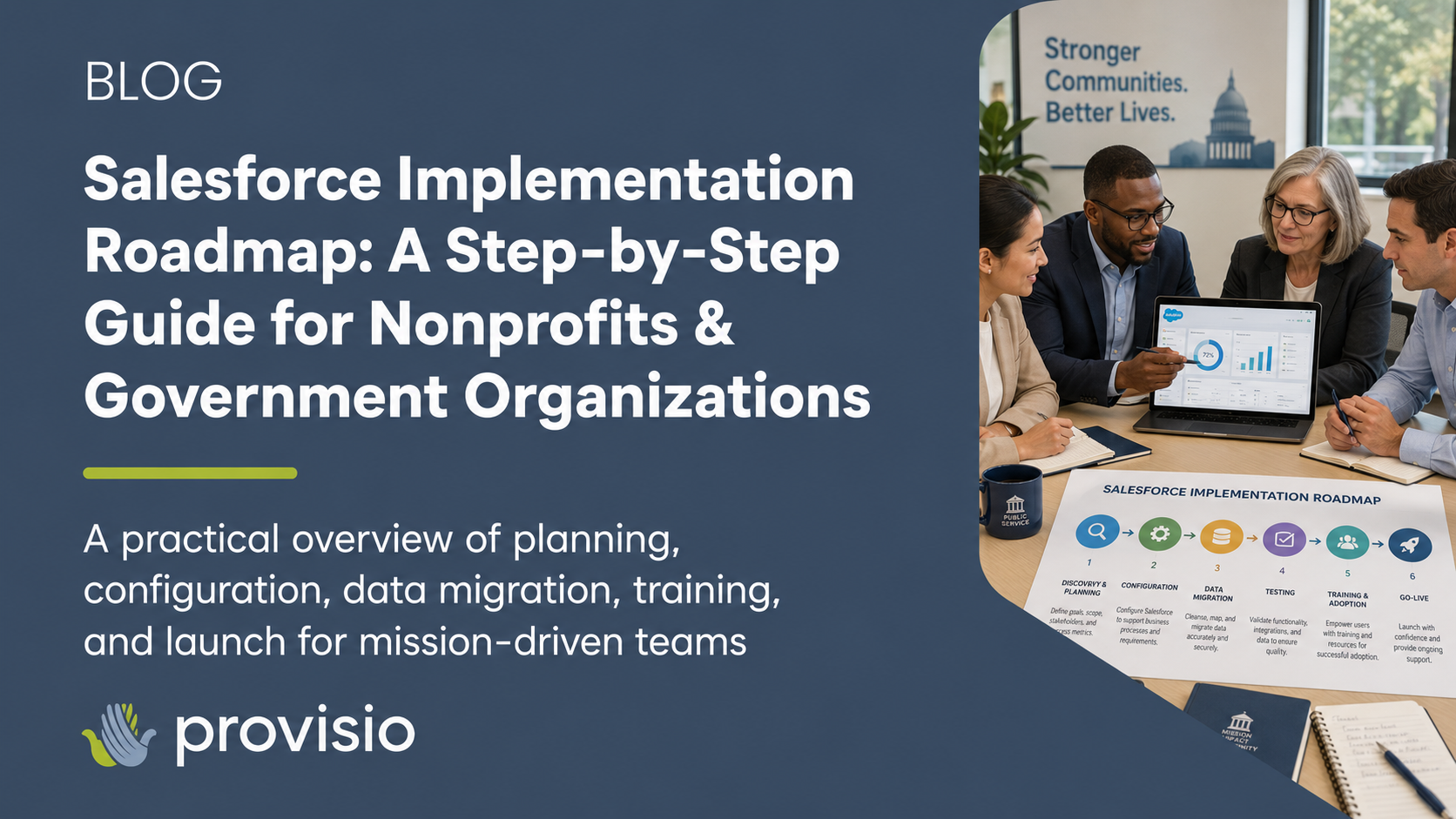
Salesforce Implementation Roadmap: A Step-by-Step Guide for Nonprofits & Government Organizations
In this guide, we will walk through a practical, phased approach to Salesforce implementation roadmap planning for nonprofits and government organizations, along with key planning tips to help you avoid common pitfalls.
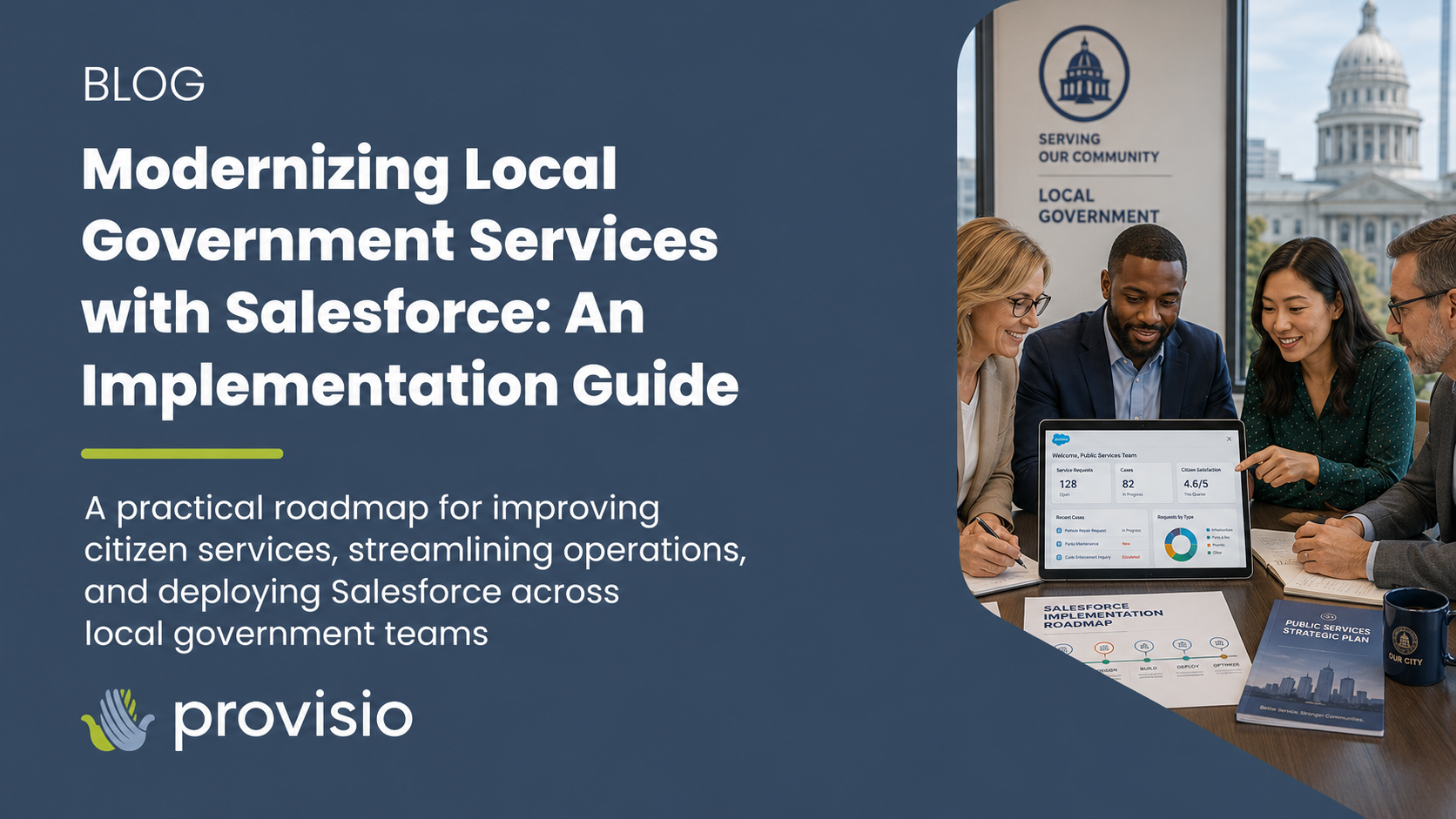
Modernizing Local Government Services with Salesforce: An Implementation Guide
Salesforce offers a powerful suite of cloud-based tools designed to meet the unique needs of mission-driven organizations. Whether you are engaging communities, coordinating field teams, or managing complex data systems, these solutions help streamline operations, drive efficiency, and improve outcomes across every function. In this guide, we will explore the different types of services provided by local government organizations and how Salesforce can help modernize them in practical, sustainable ways.
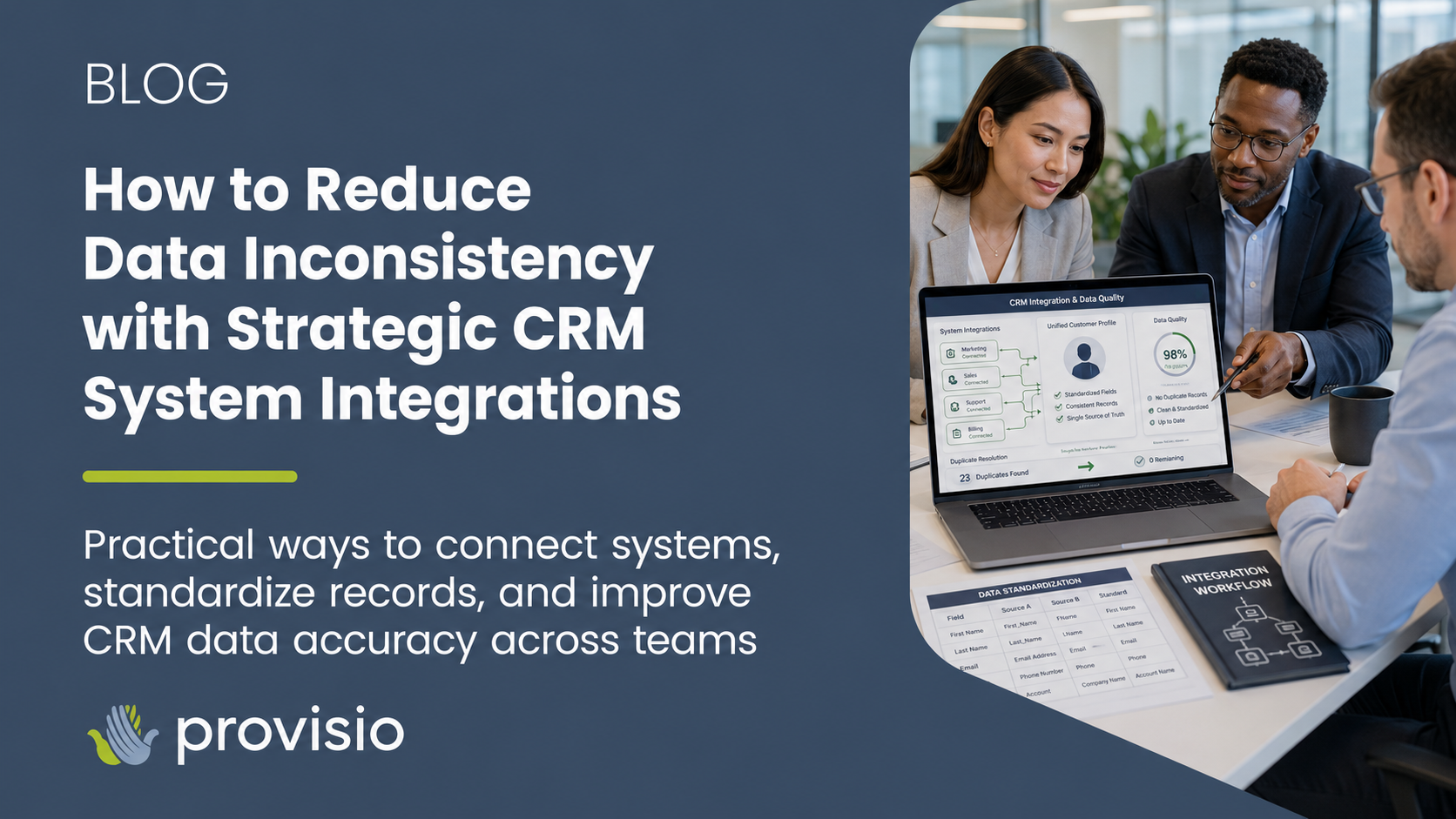
How to Reduce Data Inconsistency with Strategic CRM System Integrations
By strategically connecting your CRM platform with the other systems your organization depends on, you can create a more accurate, reliable, and actionable data environment. This article explains what causes data inconsistency, why inconsistent data creates operational risk, and how strategic CRM integrations help nonprofits and public sector organizations unify data sources so they can operate more intelligently and efficiently.