
Mission-driven organizations are under increasing pressure to deliver measurable impact, operate efficiently, and remain accountable to funders and stakeholders. In response, many nonprofits and government agencies turn to new software as a quick fix. But technology alone does not solve operational challenges.
What these organizations truly need is a clear technology roadmap—a strategic plan that aligns technology investments with mission outcomes. Without one, even the most powerful tools can create more complexity instead of progress.
This article explores why technology roadmaps are essential for growth, sustainability, and long-term impact—and how the right partner can help you build one.
The Problem: Buying Software Without a Strategic Plan
It’s a familiar pattern:
A grant requires new reporting capabilities.
Staff struggle with spreadsheets and manual processes.
Leadership wants better dashboards and data insights.
A vendor promises a quick, all-in-one solution.
So the organization purchases new software.
Months later, teams are still using workarounds. Systems don’t integrate. Data lives in silos. Staff adoption is low. Leadership still lacks real-time visibility.
The issue isn’t the software itself—it’s the absence of technology roadmapping.
When organizations skip the development process—a systematic, collaborative approach to planning and implementing technology—they miss out on guided planning, expert input, and alignment with industry standards, which leads directly to these challenges.
Without a strategic framework guiding technology decisions, organizations risk:
Redundant systems
Inefficient processes
Escalating costs
Low staff adoption
Limited scalability
A thoughtful technology roadmap prevents these issues before they arise.
The Importance of Technology Roadmapping
A technology roadmap is a strategic plan that outlines how technology will support an organization’s mission over time. It connects:
Business goals
Program objectives
Operational processes
Data requirements
Technology investments
An effective roadmap is created through collaboration among experts such as product developers, project managers, scientists, engineers, and marketing specialists, and requires strategic thinking to ensure it aligns with both scientific goals and market needs.
Rather than focusing on a single tool, technology roadmaps take a long-term, mission-aligned view of systems, integrations, and infrastructure.
Effective technology roadmapping answers critical questions:
What systems do we truly need?
How should they integrate?
What data must we capture and report on?
What is the phased timeline for implementation?
How will this investment scale with our growth?
Engaging stakeholders and defining requirements are critical steps in developing a technology roadmap to reflect the needs of various departments. Gathering stakeholder input ensures the roadmap addresses the needs of the organization and provides diverse perspectives.
For nonprofits and government agencies, this alignment is especially important because budgets are limited and accountability is high.
Why Mission-Driven Organizations Specifically Need a Technology Roadmap

1. Limited Budgets Demand Smarter Technology Initiatives
Nonprofits and public sector agencies operate under tight financial constraints. Every dollar must drive impact.
A technology roadmap ensures that investments:
Align with long-term strategy
Avoid duplication
Reduce technical debt
Deliver measurable ROI
A roadmap focuses on high-impact projects by identifying and prioritizing initiatives that deliver the greatest value to the organization.
Instead of reacting to immediate pain points, organizations can prioritize initiatives that produce sustainable value. This process involves brainstorming technology projects and then prioritizing them to ensure alignment with strategic objectives and maximize impact.
2. Funding and Compliance Require Strong Reporting
Health and Human Services organizations must demonstrate outcomes, track services, and maintain compliance with funders and regulators.
Disconnected systems make reporting difficult and time-consuming.
Technology roadmaps identify:
What data should be captured
How systems integrate to eliminate manual reporting
Where automation can improve compliance
How dashboards can provide leadership visibility
Project managers are key stakeholders in developing and managing the technology roadmap process, ensuring that reporting and compliance requirements are effectively addressed.
This transforms reporting from a burden into a strategic asset.
3. Staff Efficiency Directly Impacts Client Services
When staff spend hours on paperwork or switching between platforms, clients receive less attention.
Strategic technology roadmapping streamlines:
Case management workflows
Program management processes
Grants tracking
Call center operations
Marketing and engagement systems
The result? Less administrative overhead and more time focused on delivering services.
4. Growth Requires Scalable Infrastructure
As mission-driven organizations expand programs or geographic reach, their technology must scale with them.
Without a roadmap, growth can create:
Data fragmentation
Workflow bottlenecks
System limitations
Expensive rework
A well-designed technology roadmap anticipates growth and builds scalable architecture from the beginning.
Components of a Technology Roadmap
A well-crafted technology roadmap is more than just a list of future projects—it’s a strategic plan that brings clarity and direction to your organization’s technology initiatives. By outlining the key components of a technology roadmap, mission-driven organizations can ensure that every technology investment supports their business priorities and broader business objectives.
Here are the essential components of an effective technology roadmap:
Vision and Strategic Objectives: Clearly define how technology will advance your organization’s mission and support long-term business goals. This sets the foundation for all technology initiatives and ensures alignment with your overall business strategy.
Key Stakeholders and Roles: Identify the business leaders, product managers, IT teams, and other relevant stakeholders who will be involved in roadmap development and execution. Engaging the right people ensures a shared understanding and keeps everyone on the same page throughout the process.
Current State Assessment: Evaluate existing systems, technical capabilities, and processes to identify gaps and opportunities. This assessment helps inform decisions about which technology solutions are needed and where improvements can drive the most impact.
Future State Architecture: Outline the desired technology landscape, including major systems, integrations, and platforms that will support your organization’s growth and technological advancements.
Initiatives and Milestones: Break initiatives into actionable projects with clear timelines, key milestones, and measurable outcomes. This visual plan helps track progress, allocate resources, and monitor progress toward strategic objectives.
Resource Allocation and Budget: Define the resources—both financial and human—required for each phase of technology implementation. This ensures that technology investments are realistic and sustainable.
Risk Assessment and Mitigation: Identify potential risk factors, such as technical debt or integration challenges, and develop strategies to address them proactively.
Communication and Change Management: Establish a plan for keeping stakeholders informed and engaged throughout the technology adoption process. Effective communication is critical for successful roadmap execution and technology planning.
By including these key components, your technology roadmap becomes a valuable tool for aligning technology solutions with business priorities, supporting informed decision making, and driving sustainable development.
With a comprehensive roadmap in place, your organization is better equipped to respond to emerging technologies, achieve strategic business goals, and deliver lasting impact.
Technology Roadmaps Turn Strategy Into Sustainable Growth
Mission-driven organizations cannot afford reactive technology decisions. A clear technology roadmap acts as a strategic blueprint, serving as a comprehensive plan that helps prioritize and align technology initiatives with overall business goals, transforming technology from a cost center into a growth enabler.
When aligned with strategy, the right systems:
Improve service delivery
Strengthen compliance
Increase transparency
Support expansion
Empower leadership with actionable data
A technology roadmap enhances agility and innovation by providing a flexible plan that allows organizations to adapt to new technologies. It also improves budgeting and cost control by identifying necessary technology upgrades in advance.
Technology roadmapping is not about adding more tools. It’s about building the right foundation to amplify your mission.
Why “Just Implementing Salesforce” Isn’t Enough
Salesforce and other modern platforms are powerful tools. However, without a clear strategy, even the best platform can become underutilized or misconfigured.
Technology roadmapping ensures that:
Your Salesforce implementation aligns with operational needs
Integrations are thoughtfully designed
Data models reflect real-world workflows
Automation supports staff efficiency
Reporting aligns with funder requirements
Software should be the outcome of a strategy—not the starting point.
How Provisio Helps Mission-Driven Organizations Build and Execute Technology Roadmaps
At Provisio, we exclusively serve Health and Human Services organizations nationwide. As a consulting firm and Salesforce Implementation Partner, we understand the unique operational, regulatory, and funding challenges that nonprofits and government agencies face.
Our services are designed to guide organizations through every stage of their technology journey. We don’t start with software—we start with strategy.
Through comprehensive technology roadmapping, we help organizations:
Assess their current systems and gaps
Define future-state architecture
Align technology with mission and growth goals
Create phased implementation plans
Identify integration and data intelligence opportunities
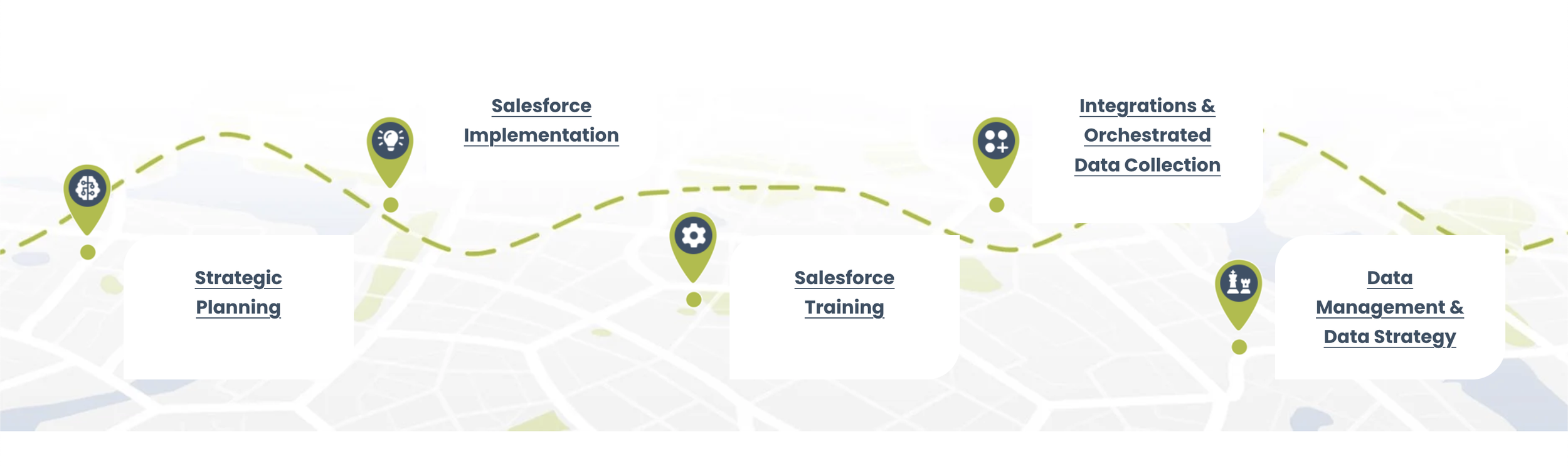
From advisory services to Salesforce implementation, systems integration, data intelligence, and managed services, we provide end-to-end support. Our solutions streamline processes, reduce paperwork, and make critical data more accessible for informed decision-making.
Our goal is simple: free your team to focus on impact—not administrative complexity.
Ready to Build a Technology Roadmap That Drives Impact?
If your organization is considering new software—or struggling with disconnected systems—it may be time to step back and create a strategic technology roadmap.
At Provisio, our advisory services are designed specifically for Health and Human Services organizations that want clarity, alignment, and scalable growth.
Contact us today to speak with a consultant and start building a technology roadmap that supports your mission today and into the future.
FAQs
-
A technology roadmap is a strategic plan that aligns an organization’s technology investments with its mission, operational goals, and long-term growth strategy. It outlines which systems are needed, how they integrate, and when they should be implemented. For nonprofits and government agencies, it ensures technology decisions support measurable impact.
-
Buying software solves a short-term need, while technology roadmapping creates a long-term strategy. Technology roadmaps evaluate the entire ecosystem—processes, data, integrations, and scalability—before selecting tools. This prevents costly rework and system fragmentation.
-
Most organizations should review and update their technology roadmap annually or when major strategic changes occur. Growth, new funding requirements, or regulatory changes may require adjustments. Regular updates ensure technology continues to align with mission priorities.
-
A nonprofit technology roadmap should include current-state assessments, future-state architecture, data strategy, integration planning, timeline phases, and budget considerations. It should also define measurable outcomes tied to mission goals. This ensures technology investments deliver real value.
