Compassionate care starts with connected systems.
Modernize your behavioral health & IDD operations with Salesforce.
Through deep strategic guidance that aligns your clinical staff and care processes with pre-built Salesforce accelerators, we help you achieve faster ROI. Connect universal intake, clinical screening, mobile crisis dispatch, and EHR systems into a single, compliant platform powered by Salesforce Nonprofit Cloud and autonomous Agentforce AI.

Last C-SSRS: low risk · Jun 12
Who We Serve Across the Behavioral Health & Human Services Continuum
Whether managing specialized outpatient therapies, 24/7 crisis teams, or long-term disability supports, we configure Salesforce Nonprofit Cloud for your exact clinical and regulatory environment.

Community Mental Health Centers (CMHCs) & Outpatient Clinics
Organizations transitioning off disjointed spreadsheets and paper files to track ongoing outpatient therapy, psychiatric care, and multi-site client caseloads.

Certified Community Behavioral Health Clinics (CCBHCs)
Integrated clinical environments requiring unified intake and care coordination platforms to track rigorous national quality measures across physical, mental health, and substance use frameworks.

Mobile Crisis Response Teams & 988 Dispatch Centers
Agencies requiring real-time geolocation tracking, rapid vehicle routing, and immediate clinical data delivery to field responders during high-stakes intervention calls.

Intellectual & Developmental Disabilities (IDD) Providers
Agencies managing Home and Community-Based Services (HCBS) Medicaid waivers, Individualized Service Plans (ISPs), staff ratios, and long-term habilitation goals for neurodiverse individuals.
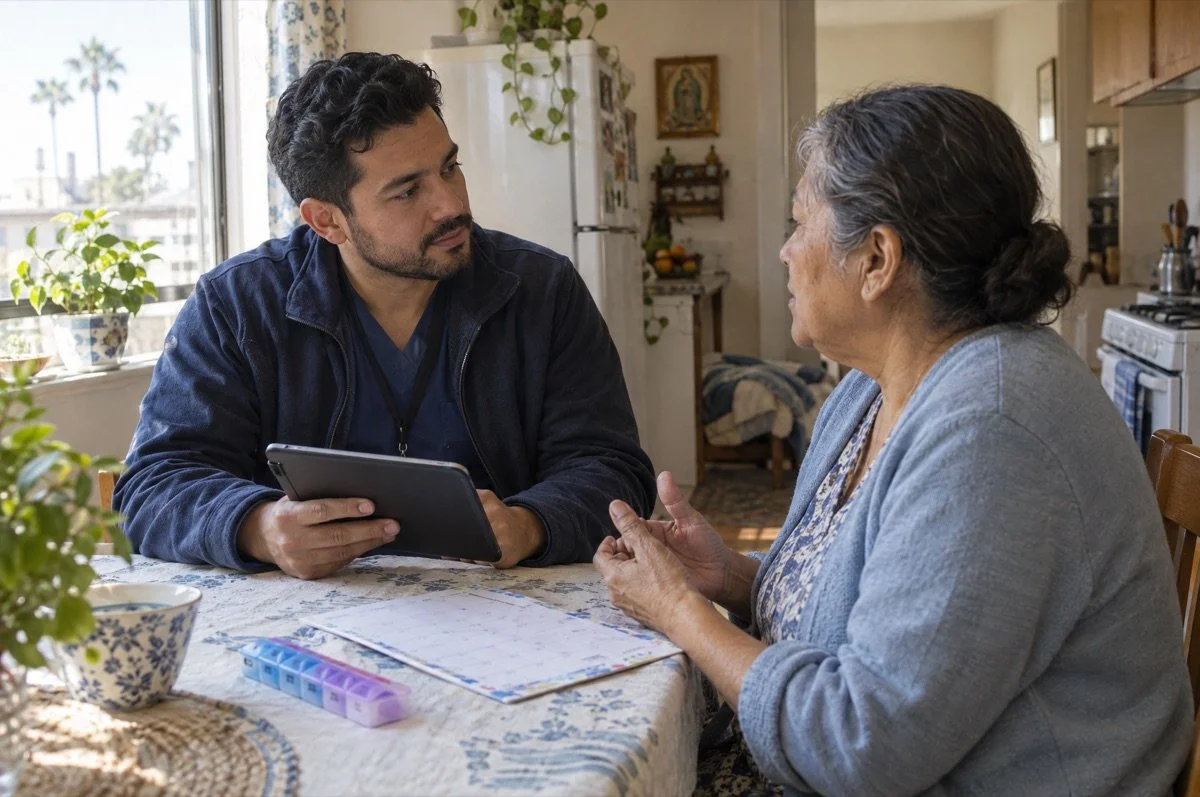
CalAIM, ECM & Community Supports Partners
California-based healthcare and behavioral health networks processing high-volume managed care population files to manage complex outreach, care management, and automated incentive billing.

Multi-Site Behavioral Health Networks
Large-scale networks operating across dozens of regional facilities that require aggregated executive dashboards, cross-program enrollments, and funder-compliant reporting.
When intake triage, assessment scores, and EHR notes live in separate spreadsheets, providers burn out and clients face barriers to care.
Common technology challenges facing behavioral health and IDD organizations:


Now that we have officially gotten our ECM Salesforce module off the ground, I just wanted to take a moment to express some gratitude! This project required an enormous amount of time, brainstorming, collaboration, troubleshooting, patience, and creativity from so many people across both teams. Bringing together workflows, technical design, reporting needs, compliance considerations, and real-world user experience was no small FEAT! ... We are also excited that this partnership will continue on future projects.
— Health Right 360
Pre-Built Salesforce Accelerators, Guided by Strategic Consulting
We configure pre-built CAUSE Solutions natively on Nonprofit Cloud to streamline your intake, coordinate care, and integrate your clinical data ecosystem—delivering faster time-to-value while safeguarding client privacy.
Module 1: Universal Intake & Digital Front Door
- Accessible Self-Service Entry: Deploy a secure, multilingual digital front door that acts as an accessible entry point for clients and referring community partners, establishing immediate trust from the first interaction.
- Social Determinants of Health (SDOH) Screening: Standardized digital assessments capture critical non-clinical barriers—including housing instability, food insecurity, and transportation challenges—routing individuals to both clinical programs and community supports natively.
- Automated Program Eligibility Matching: The platform evaluates complex multi-grant eligibility rules in real time, instantly generating a time-stamped enrollment file that cuts intake administrative cycles from days to minutes.
Module 2: The Provisio Assessment Engine
- Automated Clinical Scoring: Purpose-built for Salesforce, this engine conducts, automatically scores, and logs validated mental health and behavioral evaluations—such as the PHQ-9, GAD-7, and C-SSRS (Columbia Suicide Severity Rating Scale)—directly within the core Nonprofit Cloud client record.
- Longitudinal Outcome Visualizations: Eliminates manual score calculations and siloed PDF uploads by displaying historical assessment trends visually over time on a single dashboard, surfacing clinical progress and identifying elevated risk levels immediately.
Module 3: Real-Time Mobile Crisis Response & 988 Dispatch
- Integrated Desktop Dispatch Console: Triage and crisis center agents receive incoming distress calls with immediate access to callers’ historical records, accompanied by a live map showing field-response vehicle locations and availability.
- Field Responder Telehealth & Data Sync: Automatically transmits critical situational context and safety alerts to mobile teams in the field. Real-time synchronization connects mobile field units, dispatch dashboards, and crisis facilities to dramatically compress emergency response windows.
Module 4: EHR-to-CRM Interoperability Layer
- Bridging Care Coordination and Clinical Charting: Salesforce Nonprofit Cloud serves as the engagement and care coordination layer while integrating bi-directionally with your certified Electronic Health Record (EHR).
- Proven Integration Experience: Using secure MuleSoft APIs and FHIR standards, Provisio connects Salesforce to market-leading behavioral health platforms—including Credible, Welligent, Netsmart, Qualifacts, and AthenaHealth—eliminating double data entry while preserving clinical billing integrity.
- Unified Multi-Site Caseloads: Aggregates cross-department data layers across multi-facility networks, enabling unified tracking of program co-enrollments, clinical encounters, and executive impact metrics.
Module 5: CalAIM (ECM & Community Supports) & CCBHC Compliance
- Automated CalAIM Workflow Operations: Built specifically for California providers managing Enhanced Care Management (ECM) and Community Supports under CalAIM regulations.
- One-Click File Generation: Automatically segments active members from prospective outreach lists, logs outreach attempts, schedules care plan milestones, and generates complex Return Transmission Files (RTF) and Outreach Tracker Files at the touch of a button.
- CCBHC Quality Measures Tracking: Enables Certified Community Behavioral Health Clinics to capture comprehensive outpatient care metrics, tracking required state and federal quality indicators across integrated physical and mental health frameworks.
Module 6: IDD Care Coordination & HCBS Waiver Management
- Individualized Service Plan (ISP) Lifecycle: Centralize ISP creation, annual goal reviews, interdisciplinary team collaboration, and developmental milestone tracking for individuals with intellectual and developmental disabilities.
- Medicaid 1915(c) HCBS Waiver Compliance: Monitor authorized service units, track authorized budget thresholds against utilization in real time, and integrate Electronic Visit Verification (EVV) data to prevent claim denials.
- Incident Management & Critical Event Logging: Streamline state-mandated critical incident reporting with automated escalation notifications, supervisor review queues, and audit-ready resolution timelines.
Autonomous Agentforce AI for Behavioral Health
CAUSE+ Eligibility Agent
An autonomous Agentforce AI companion that assists staff during intake, evaluating complex program rules and matching clients to appropriate clinical teams or housing supports.
CAUSE+ Follow-Up Agent
Automates routine, supportive client check-ins and appointment reminders via SMS to maintain engagement and continuity of care without adding tasks to clinician calendars.
CAUSE+ Grant Onboarding AI
Scans, extracts, and organizes operational deliverables from complex 80+ page federal and philanthropic grant contracts in minutes.
Deploying Agentforce AI Safely via the Einstein Trust Layer
Safeguard Protected Health Information (PHI) under HIPAA and 42 CFR Part 2 standards. Salesforce’s Einstein Trust Layer masks detected PII/PHI before prompts reach external models, backed by zero-retention agreements and full audit trails.
A Thoughtful, Process-First Transformation Designed to Eliminate Implementation Risk
Aligning your organization's people and clinical workflows so they work hand-in-hand with technology is just as important as implementing software itself. We anchor Nonprofit Cloud to your real, daily clinical routines so your care managers achieve sustainable, human-centered outcomes.
Step 1
Strategic Discovery & Business Process Clarity
We engage clinical leadership and frontline teams in structured workflow workshops to map processes—from initial intake and SDOH screening to crisis dispatch and EHR sync—before writing code. By focusing on clinical care delivery rather than software feature checklists, we resolve operational bottlenecks and align leadership around shared priorities.
Step 2
Organizational Capability Mapping & Fixed-Fee Scoping
We define the explicit technical capacities required to support your staff, delivering a clear technology roadmap tied to your specific budget and operational scope. This transparent scoping model prevents unexpected downstream budget surprises.
Step 3
Phased Implementation & Change Enablement
We address user adoption from the start. By assessing clinical change readiness, we deliver role-based staff training, change management protocols, and clinician enablement plans. This addresses staff concerns about technology replacing human care, ensuring clinicians trust and adopt Nonprofit Cloud to enhance direct client time.
Step 4
Data Strategy & Reporting as a Resilience Strategy
We standardize how intake evaluations, validated assessments (PHQ-9, C-SSRS), and treatment milestones are documented. Backed by Salesforce Shield field encryption and HIPAA/42 CFR Part 2 access controls, your data architecture provides audit-ready reporting that safeguards healthcare and grant funding amidst shifting regulatory mandates.
Step 5
Deep Strategic Alliance & Ongoing Managed Services
Go-live is just the beginning of system sustainability. Provisio provides active hypercare and continuous managed services to handle system enhancements, maintain EHR integration bridges, and configure advanced Agentforce AI scaling.
Salesforce Solution Consultants with Deep Sector Expertise

A Process-First Strategic Approach
We provide every client with strategic guidance to ensure technology supports long-term mission goals without disrupting direct patient care. Through clinical workflow optimization, data governance, and leadership alignment, we help care teams minimize administrative overhead and focus on client healing.
Deep Human Services & Healthcare Expertise
We don’t just know Salesforce—we specialize in outpatient mental health, CCBHCs, IDD services, and mobile crisis operations. Our team understands the nuances of 42 CFR Part 2 privacy, CalAIM billing, and multi-program care coordination.
Pre-Built Accelerators
Accelerate implementation timelines using our pre-built Behavioral Health CAUSE Solutions, including our Assessment Engine, Universal Intake front doors, and CalAIM frameworks. Prove ROI faster with minimal disruption to ongoing clinical services.
Proven Sector Impact
Learn how Pacific Clinics scaled referral capacity by 538% and reduced monthly reporting processes from 80 staff hours to 15 minutes using Salesforce Nonprofit Cloud and Agentforce AI.
Client success storiesFrequently Asked Questions
-
Data migration is a core component of our implementation methodology. We start with a comprehensive data mapping exercise to clean and standardize your legacy spreadsheet or legacy CRM data. We then architect Nonprofit Cloud's data model to match your specific program logic models and compliance requirements before securely executing the data transfer.
-
No, Salesforce does not replace your clinical EHR. Instead, Nonprofit Cloud serves as the engagement, care coordination, intake orchestration, and digital front-door layer that sits in front of your EHR. We use MuleSoft and secure APIs to connect Salesforce to platforms like Netsmart, Credible, Welligent, Qualifacts, and AthenaHealth. This ensures demographic data, appointments, and care milestones flow seamlessly without requiring dual-entry by clinical staff.
-
We architect Salesforce environments using Salesforce Shield (which provides platform encryption at rest and in transit) and the Einstein Trust Layer. The Trust Layer automatically masks detected Protected Health Information (PHI) and Personally Identifiable Information (PII) before any prompt is processed by an LLM. Furthermore, your proprietary client data is strictly protected by zero-retention agreements and is never used to train third-party public AI models.
-
Yes. If your organization wants to validate its data architecture or process readiness before a full launch, we offer upfront advisory and readiness assessments. As we demonstrated with the Mental Health Association of San Francisco (MHASF), we can focus initially on stakeholder interviews, clinical workflow mapping, and building a prioritized roadmap.
-
Yes. For California behavioral health providers implementing Enhanced Care Management (ECM) or Community Supports under CalAIM, Provisio is an approved vendor on The PATH Technical Assistance Marketplace. Eligible organizations can apply directly for marketplace funding to fully cover technical consulting, workflow design, and implementation costs.
Kickstart your clinical innovation journey.
Speak directly with a Provisio behavioral health consultant to schedule a 30-minute operational assessment call.
30-minute assessment call

Insights from the intersection of technology and behavioral health