
For nonprofits and government agencies, technology decisions are never just about software. They are about improving service delivery, strengthening accountability, supporting staff, and creating better outcomes for the communities you serve. That is why a clear Salesforce implementation roadmap matters.
Salesforce offers a powerful suite of cloud-based tools designed to meet the unique needs of mission-driven organizations. Whether you are engaging communities, coordinating field teams, or managing complex data systems, these solutions can help streamline operations, drive efficiency, and improve outcomes across every function. Still, success does not come from technology alone. A thoughtful Salesforce implementation roadmap helps organizations move from vision to execution with less disruption, better alignment, and stronger long-term adoption.
In this guide, we will walk through a practical, phased approach to Salesforce implementation roadmap planning for nonprofits and government organizations, along with key planning tips to help you avoid common pitfalls.
Why a Salesforce Implementation Roadmap Matters
A Salesforce implementation is a major investment in your organization’s future. Without a structured roadmap, teams can easily run into unclear priorities, scope creep, low user adoption, fragmented data, and missed opportunities for impact.
A well-defined Salesforce implementation roadmap helps your organization:
Align technology with mission goals
Clarify priorities and implementation phases
Improve stakeholder collaboration
Reduce implementation risks
Prepare staff for change
Build a scalable foundation for future growth
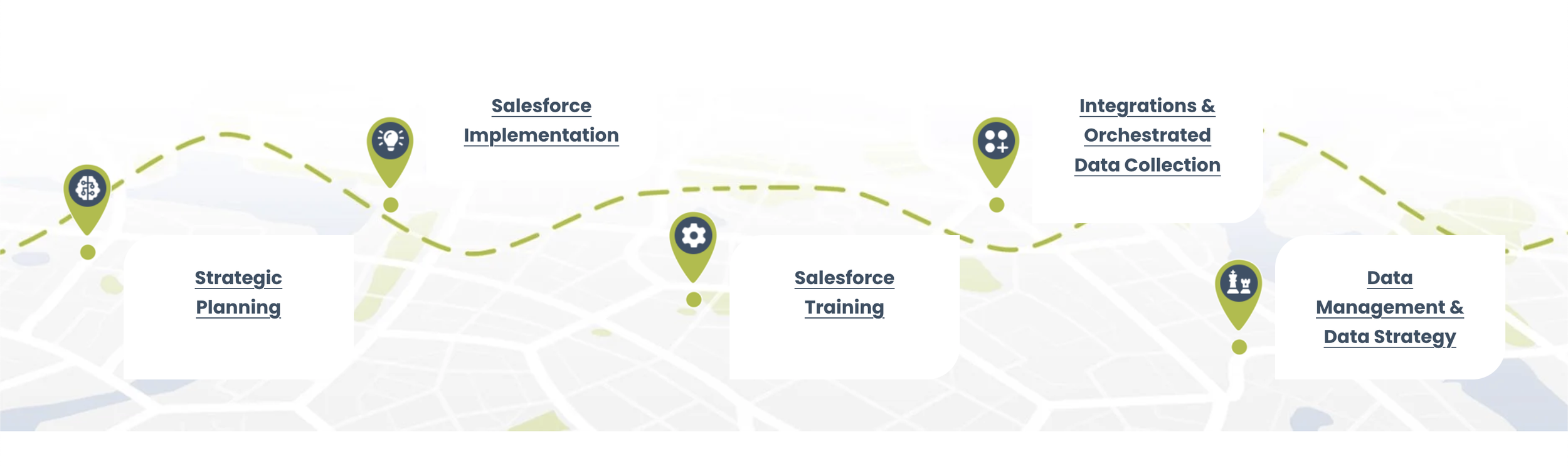
For nonprofits and government organizations in particular, strong Salesforce implementation roadmap planning is essential because projects often involve multiple programs, funding requirements, case management needs, compliance considerations, and diverse stakeholder groups.
Who Needs a Salesforce Implementation Roadmap?
A strong Salesforce implementation roadmap is especially valuable for organizations that are:
Replacing outdated legacy systems
Moving from spreadsheets or disconnected databases
Consolidating multiple tools into one platform
Expanding service delivery across programs or regions
Improving reporting, compliance, and impact measurement
Modernizing operations for long-term sustainability
For mission-driven organizations, the roadmap is not just a technical document. It is a strategic guide that connects systems, people, and processes to mission outcomes.
Phase 1: Establish Mission Goals and Organizational Priorities
The first phase of any Salesforce implementation roadmap should focus on strategy before technology. Too often, organizations jump into platform features before clearly defining what success looks like.
Start by identifying your core business and mission objectives. Ask questions such as:
What operational challenges are slowing down staff?
Which services or programs need better visibility?
What data do leaders, funders, and stakeholders need?
Where are there gaps in reporting, coordination, or constituent engagement?
What outcomes should this implementation improve?
For nonprofits, goals may include stronger donor engagement, more efficient case management, better grant tracking, or improved program reporting. For government agencies, goals may center on service coordination, constituent communication, compliance, cross-department visibility, or field operations.
At this stage, your Salesforce implementation roadmap planning should define:
Strategic goals
Key success metrics
Primary use cases
Departmental priorities
Executive sponsorship
This alignment sets the tone for every step that follows.
Phase 2: Build the Right Implementation Team
A Salesforce implementation roadmap is only as strong as the people guiding it. Successful implementations bring together a mix of leadership, program staff, technical stakeholders, and operational decision-makers.
Your implementation team may include:
Executive sponsors
Program leaders
Operations and administrative staff
IT or systems leaders
Data and reporting stakeholders
End users from key departments
An experienced Salesforce implementation partner
It is important to involve both leadership and frontline users early in the process. Leadership helps drive alignment and resourcing, while frontline staff provide critical insight into day-to-day workflows and pain points.
This phase of Salesforce implementation roadmap planning should also clarify roles and responsibilities. Decide who will approve requirements, provide feedback, manage internal communications, and support user adoption.
Phase 3: Assess Current Processes, Systems, and Data
Before designing your future Salesforce environment, you need a clear understanding of your current state. This is one of the most important steps in any Salesforce implementation roadmap because it reveals inefficiencies, duplication, and opportunities for improvement.
A current-state assessment should review:
Existing systems and tools
Manual workarounds and spreadsheets
Data quality issues
Reporting gaps
Departmental workflows
Integration needs
Compliance and security requirements
This step is particularly important for nonprofits and government organizations that manage sensitive service data, funding requirements, and multi-program operations. A strong assessment helps ensure your Salesforce implementation roadmap reflects real business needs, not assumptions.
During this phase, document:
What is working well
What is causing friction
Which processes should be standardized
Which data should be migrated
What future-state improvements matter most
Phase 4: Define Requirements and Prioritize Use Cases
Once you understand your current state, the next step in the Salesforce implementation roadmap is defining requirements. This involves turning business goals and process findings into a clear set of functional and technical needs.
Examples of requirements may include:
Case management workflows
Program enrollment tracking
Constituent communication history
Referral and intake processes
Outcome and impact reporting
Donor or stakeholder engagement tracking
Automated notifications and approvals
Role-based access and security controls
Integration with external systems
Not every requirement needs to be implemented at once. That is where Salesforce implementation roadmap planning becomes critical. Prioritize features and use cases based on impact, complexity, and readiness.
A helpful approach is to break needs into categories such as:
High-Priority Needs: These are essential for launch and tied directly to mission-critical operations.
Secondary Enhancements: These improve efficiency and user experience but can follow after the initial rollout.
Future-State Opportunities: These may include advanced analytics, AI readiness, deeper integrations, or cross-department expansion.
This phased prioritization helps organizations launch with focus instead of trying to solve everything at once.
Phase 5: Design the Salesforce Solution Architecture
With requirements prioritized, your Salesforce implementation roadmap moves into solution design. This phase translates organizational needs into a structured platform design that supports long-term growth.
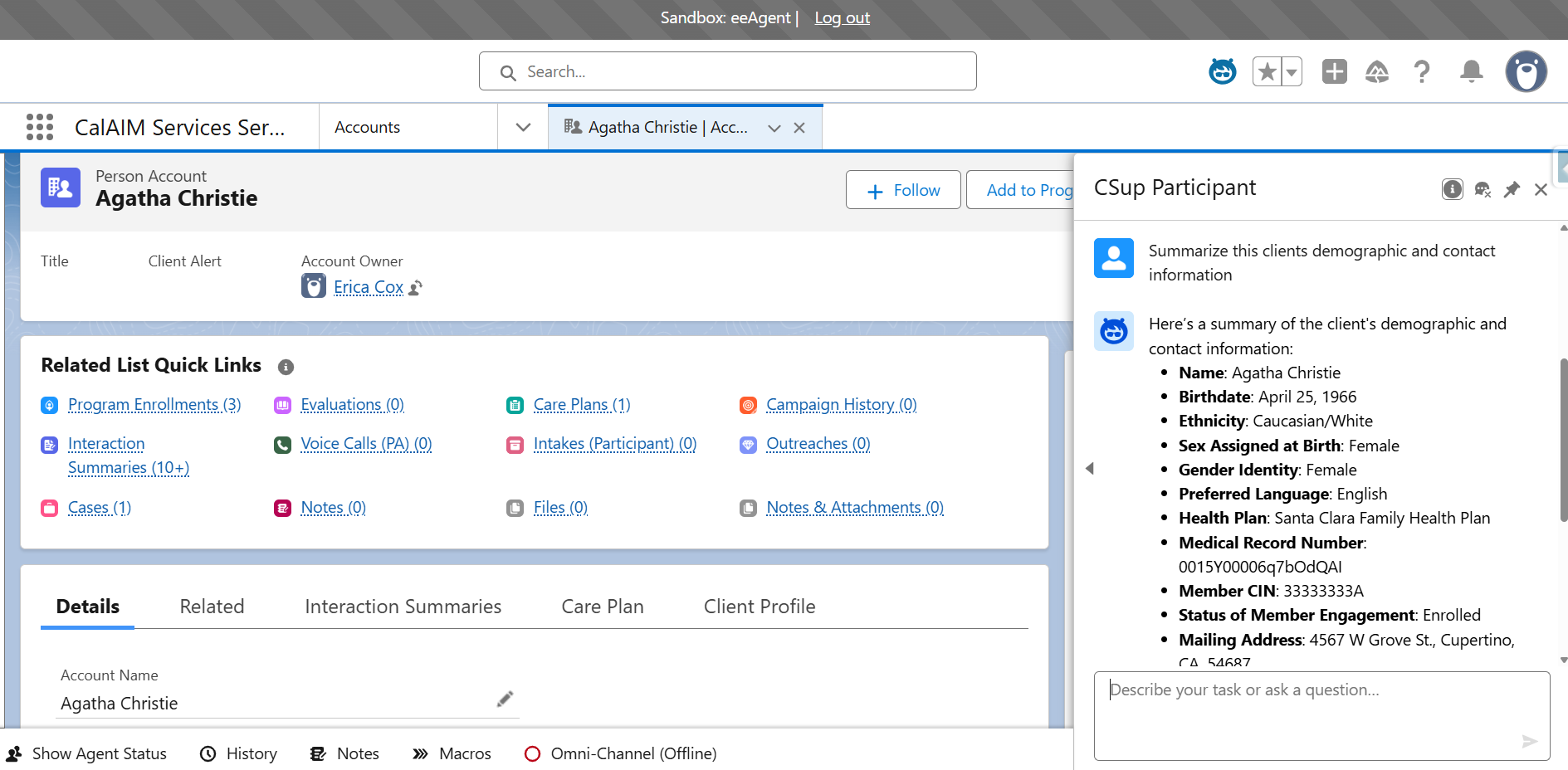
This may include planning for:
Salesforce products and licenses
Data model design
User roles and permissions
Workflow automation
Page layouts and user experience
Reporting dashboards
Integration architecture
Data governance standards
For nonprofits and government organizations, good design should balance flexibility with simplicity. The goal is not to over-engineer the platform. The goal is to create a system that supports staff, improves visibility, and can evolve with your mission.
A strong Salesforce implementation roadmap planning process will also account for future scalability. Even if you are launching with one department or program, your design should consider how the system can support expansion over time.
Phase 6: Create a Data Migration and Data Governance Plan
Data is one of the most important parts of any Salesforce implementation roadmap. Poor data quality can undermine adoption, reporting, and trust in the system from day one.
Before migration begins, organizations should identify:
Which data sources will be migrated
Which records need cleanup
How duplicates will be handled
What data should be archived instead of migrated
Which fields and values need standardization
Who will own data governance after launch
This is also the time to establish ongoing data governance practices. Salesforce implementation roadmap planning should not treat data as a one-time migration task. It should define how data will be managed, maintained, and trusted in the long run.
For mission-driven organizations, clean and connected data supports:
Better service coordination
More accurate reporting
Stronger grant and funding accountability
Clearer impact storytelling
Smarter strategic decision-making
Phase 7: Configure, Build, and Integrate
This is the phase where your Salesforce implementation roadmap becomes reality. Based on approved requirements and solution design, your implementation team begins configuring Salesforce, building automations, and setting up integrations.
Typical activities in this phase include:
Configuring objects, fields, and page layouts
Building workflows and automations
Creating dashboards and reports
Setting up security and permissions
Integrating third-party systems
Testing data migration processes
Preparing sandbox and production environments
This phase should follow a structured build process with checkpoints for stakeholder review. Regular feedback loops help ensure the system stays aligned with user needs and does not drift away from the original goals established during Salesforce implementation roadmap planning.
Phase 8: Test Thoroughly Before Launch
Testing is a critical but sometimes underestimated part of a Salesforce implementation roadmap. Even the best-designed system needs real-world validation before it goes live.
Testing should include:
Functional testing
User acceptance testing
Integration testing
Data validation
Security and access testing
Reporting validation
For nonprofits and government teams, user acceptance testing is especially important because workflows often vary by role, department, or program. Staff should have the opportunity to validate that the system supports real operational needs.
A strong Salesforce implementation roadmap planning approach will also leave time to fix issues uncovered during testing instead of compressing everything into a rushed launch timeline.
Phase 9: Prepare for Change Management and User Adoption
Technology adoption does not happen automatically. One of the most important parts of a successful Salesforce implementation roadmap is preparing people for change.
This includes:
Communicating the purpose of the implementation
Explaining how the system supports staff and mission goals
Providing role-specific training
Identifying internal champions
Creating documentation and support resources
Addressing resistance early
For nonprofits and government organizations, change management often matters as much as the technology itself. Staff may already be stretched thin, and new systems can feel disruptive without the right support.
Effective Salesforce implementation roadmap planning includes a user adoption strategy from the beginning, not just at the end. When people understand the value of the system and feel confident using it, long-term success becomes much more likely.
Phase 10: Launch, Optimize, and Scale for Long-Term Success
A successful Salesforce implementation roadmap does not end at go-live. The final phase should focus on launching the system in a manageable way, supporting users through adoption, and refining the platform over time.
A phased rollout is often the best approach for nonprofits and government organizations. Rather than deploying every feature and department at once, organizations can launch core capabilities first, stabilize the system, gather feedback, and expand strategically.
This phase of Salesforce implementation roadmap planning should include:
Launching by department, program, or priority use case
Monitoring user adoption and early performance metrics
Resolving post-launch issues quickly
Refining workflows, dashboards, and automations
Identifying opportunities for additional integrations or enhancements
Strengthening governance for long-term scalability
Opportunities for AI readiness and adoption
By treating launch as the beginning of continuous improvement, organizations can get more long-term value from Salesforce and ensure the platform evolves alongside mission needs.
Salesforce Implementation Roadmap Planning Tips for Nonprofits and Government Organizations
Thoughtful Salesforce implementation roadmap planning can make the difference between a smooth transformation and a frustrating project. Here are several practical tips to guide the process.
Start With Strategy, Not Software
Do not begin with a list of features. Begin with mission goals, operational pain points, and measurable outcomes.
Prioritize Processes Before Customization
A system should support strong processes, not compensate for unclear ones. Simplify and standardize where possible before building.
Keep the Initial Scope Focused
Trying to solve every challenge in phase one can lead to delays and complexity. Start with the highest-value use cases first.
Involve End Users Early
Frontline staff understand daily workflows better than anyone. Their input is essential for creating a usable system.
Treat Data as a Strategic Asset
Invest in data cleanup, governance, and reporting design. Trusted data supports better decisions and stronger impact storytelling.
Build for Scalability
Even if your first rollout is limited, your Salesforce implementation roadmap should anticipate future growth and new use cases.
Invest in Change Management
User adoption requires training, communication, and leadership support. Do not leave this until the end.
Choose an Experienced Partner
A knowledgeable Salesforce implementation partner can help you avoid common pitfalls, align technology with mission needs, and accelerate results.
Why Mission-Driven Organizations Choose Provisio
At Provisio, we understand that nonprofits and government organizations need more than a software rollout. They need a partner who understands mission complexity, service delivery realities, funding pressures, and the importance of measurable outcomes.
Provisio is a Salesforce Implementation Partner exclusively serving Health and Human Services organizations nationwide. We focus on sectors including housing and shelter, workforce development, mental and behavioral health, aging care, and early childhood.

We help nonprofits and state and local governments implement mission-aligned technology that creates better outcomes for the people they serve while strengthening their ability to tell their impact story to funders.
Our services include:
Process optimization
Change management
We advance your mission by streamlining processes, revealing holistic data-driven insights, and guiding a culture of innovation across your organization. Our technology solutions and strategic guidance support critical services such as case management, program management, grants management, fundraising, and more.
Because we work exclusively with Health and Human Services organizations, we bring deep experience in the operational realities, compliance demands, and service delivery challenges mission-driven teams face every day. That means your Salesforce implementation roadmap is grounded not only in technology best practices, but also in a real understanding of your mission.

Ready to Build a Salesforce Implementation Roadmap That Drives Greater Impact? Contact Provisio Today to Get Started
A successful Salesforce implementation does not happen by accident. It takes clear goals, thoughtful planning, stakeholder engagement, strong data practices, and a roadmap that reflects the real needs of your organization.
For nonprofits and government agencies, the right Salesforce implementation roadmap can help transform disconnected systems into a more unified, efficient, and mission-aligned foundation for service delivery and growth. And with intentional Salesforce implementation roadmap planning, your organization can move forward with greater confidence, less risk, and stronger long-term value.
If your organization is ready to explore a Salesforce implementation roadmap built around your mission, contact Provisio to chat with a consultant. We would love to learn about your goals and discuss how our team can help you plan, implement, and optimize a Salesforce solution that supports better outcomes for the people you serve.
-
A Salesforce implementation roadmap is a structured plan that outlines each stage of a Salesforce rollout, from strategy and requirements gathering to launch and ongoing optimization. It helps nonprofits and government organizations stay aligned, reduce risk, and implement Salesforce in a way that supports long-term mission success.
-
Salesforce implementation roadmap planning typically includes defining goals, assessing current systems, gathering requirements, designing the solution, planning data migration, testing, training users, and preparing for launch. It also includes long-term considerations like governance, optimization, and scalability.
-
Organizations should prioritize mission-critical workflows, user needs, clean data, and measurable business outcomes during Salesforce implementation roadmap planning. It is usually best to focus on high-impact use cases first and phase in more advanced functionality over time.
-
Provisio helps nonprofits and government organizations plan, implement, and optimize Salesforce in ways that support mission outcomes and operational efficiency. Our team provides strategic planning, process optimization, data strategy, change management, systems integration, Salesforce implementation, managed services, and AI readiness support.
