
How AIforce Makes Salesforce More Accessible for Human Services Nonprofits and Government Agencies
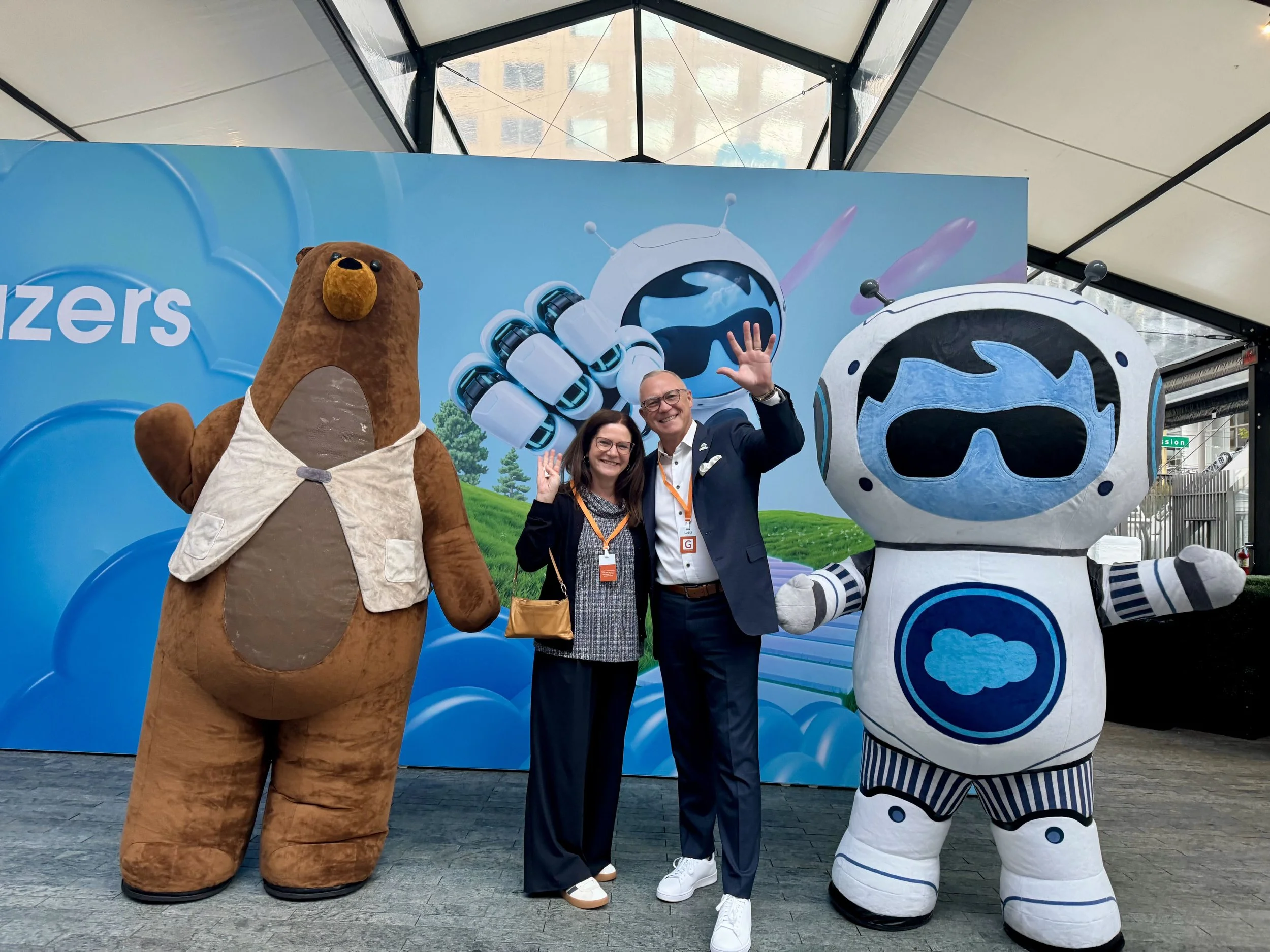
Provisio CEO Travis Bloomfield & CIO Erica Cox at Dreamforce 2026!
Salesforce’s launch of AIforce at Dreamforce 2026 marks a fundamental shift in how human services organizations, from nonprofits to state and local government agencies, interact with technology: the CRM is officially leaving the desktop browser window and is now accessible through a wider range of tools that health and human services (HHS) teams already rely on every day, like Slack, Claude, and mobile messaging apps.
That gives all teams the ability to manage case notes, check program eligibility, or trigger workflows without having to be logged into Salesforce itself. Now, caseworkers, intake specialists, and program leadership across the public sector and nonprofit ecosystem can simply interact with their client database using natural, everyday language from wherever they work.
What is Salesforce AIforce?

Historically, getting information into or out of a CRM required opening a browser tab, logging in, navigating custom record layouts, and typing into specific fields. If you weren’t comfortable in Salesforce or were working on a smartphone in the field, that process could be a major administrative headache.
AIforce introduces what is known as a "headless" CRM approach. It acts as a seamless bridge between Salesforce's underlying database and third-party AI surfaces. Think of Salesforce as the central engine powering your client records and operational rules, while AIforce lets your team choose their preferred controls, whether that means chatting in Claude on a laptop, collaborating in Slack, or using a mobile app on the go. It’s like giving everyone on your team a personal executive assistant who lives inside their favorite messaging app or AI tool.
Whether a staff member prefers typing a prompt into Claude or dictating a voice note into Slack on their phone, AIforce translates those natural human conversations into real CRM actions behind the scenes:
"Summarize Marcus's case history before my 2 PM meeting with him."
or
"Log today's site visit for the Miller family in Salesforce, update their housing status to Pending, and set a reminder for me to follow up next Tuesday."
Without leaving their current app, the worker gets instant answers or confirmation that the CRM record has been updated without disrupting their daily workflow.
The Three Pillars of AIforce
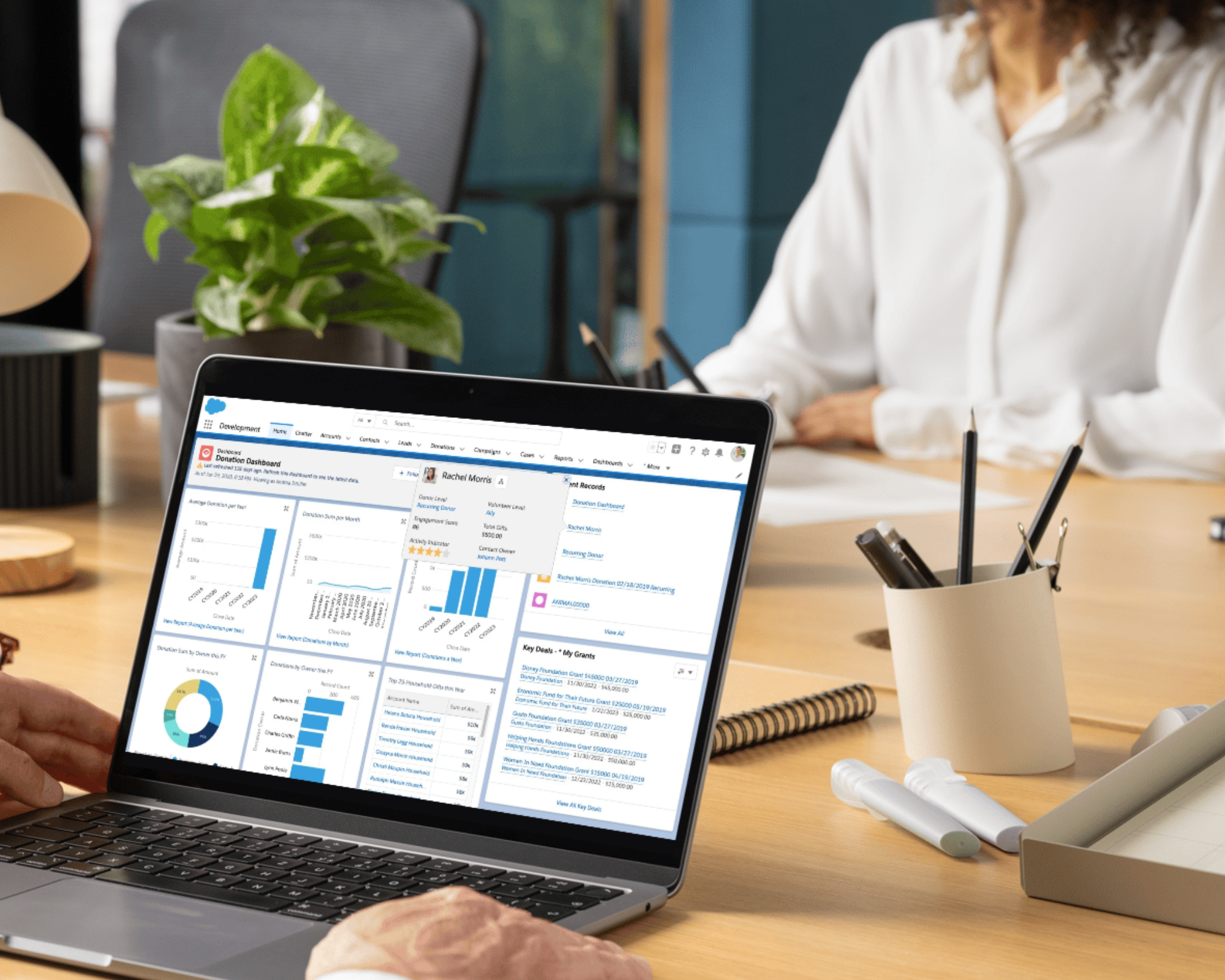
AIforce isn't just a single product. It’s a suite of three distinct integrations that deliver Salesforce capabilities directly into the software platforms your nonprofit or government agency uses every day:
Agentforce Coworker: An AI assistant built directly into the standard Salesforce desktop interface. For staff who do work inside the CRM daily, Coworker helps summarize files, analyze case history, and automate routine data entry.
Slackforce: Brings CRM functionality into your organization's primary communication hub. Staff can access live Salesforce records inside a Slack channel, collaborate across departments on a complex client case, and update database fields directly from a chat.
Claudeforce: This integration allows staff to harness organizational data inside Claude AI to query their CRM, draft grant proposals, synthesize policy compliance guidelines, or update case notes without ever logging into Salesforce.
How AIforce Solves the Challenges of Human Services Organizations

1. Democratizing CRM Access & Ending Caseworker Burnout
Social workers and intake staff in nonprofits and government agencies often spend up to half their day on administrative paperwork rather than direct constituent care. AIforce democratizes CRM access by bringing Salesforce functionality into tools staff already know, removing the need for technical training on complex CRM interfaces.
The Office Scenario: Instead of spending 10 minutes navigating tabs, drop-down menus, and text fields in Salesforce after an intake call, a specialist opens Claude or Slack and types: "Summarize my intake call with Marcus, set his housing status to Pending, and assign me a follow-up task for Tuesday." AIforce processes the request in the background, updates the Salesforce database, and creates the task instantly.
The Field Scenario: A caseworker completing home visits opens Slack on their phone and dictates a 30-second audio note: "Finished home visit with the Miller family. Home is safe, but mom requested emergency food assistance." AIforce parses the audio, files structured case notes under the Miller family record in Salesforce, and triggers an automated alert to the agency's food pantry team—all while the caseworker drives to their next visit.
2. Unlocking Siloed Data Across Government & Nonprofit Platforms
Constituents rarely interact with just one program. A family might simultaneously rely on housing vouchers, nutrition assistance, and mental health services split across different government funding sources and agency software platforms. Normally, seeing that full picture requires logging into multiple complex databases. Powered by zero-copy data architecture, AIforce allows staff to query connected databases simultaneously through a single prompt in Slack or Claude. A caseworker can ask for a family's full program enrollment across multiple systems and receive a unified 360-degree view delivered straight to their chat window without moving or duplicating sensitive public sector records.
3. Executing Real CRM Actions Outside Salesforce
Traditional website chatbots usually fail in human services because they can only answer static FAQ. They cannot perform actual case management tasks. AIforce powers autonomous AI agents that execute multi-step Salesforce workflows from external tools. Whether a constituent checks their application status via an automated self-service channel, or a program manager approves a grant allocation directly within a Slack thread, AIforce verifies user permissions, updates live database fields, and executes the required workflow behind the scenes within strict guardrails.
4. Meeting Security Standards Across Third-Party Platforms
Allowing government and nonprofit staff to interact with sensitive constituent data inside third-party applications like Claude or Slack can raise immediate red flags for privacy and compliance officers. AIforce addresses these concerns by operating on a Zero Data Retention architecture. Furthermore, AIforce strictly inherits existing Salesforce user permissions. If a staff member or volunteer does not have security clearance to view a sensitive case file inside Salesforce, they cannot access it through Slack or Claude either. Staff can leverage AI to query and update sensitive health and human services records (PHI/PII) with absolute confidence that constituent data is safely processed, securely stored, and fully compliant with HIPAA and public sector standards.
How Provisio Provides the Data Foundation for AIforce
AIforce will be a game-changing tool for health and human services teams, but enterprise AI is ultimately only as smart as the data feeding it. If your agency’s client data is messy, duplicated, or scattered across disconnected legacy platforms, even the most advanced AI reasoning model cannot provide your caseworkers with accurate answers.
That’s where a comprehensive data strategy becomes essential. At Provisio, we help public sector agencies and nonprofits build the clean, secure, and unified data architecture required for enterprise AI to deliver real mission impact.
Our team works alongside yours to:
Assess AI Data Readiness: Audit existing CRM and legacy agency databases to identify data gaps, resolve duplicate constituent profiles, and structure historical case notes.
Unify Disparate Systems: Leverage architectures like Salesforce Data Cloud to connect state portals, electronic health records (EHRs), and grant management platforms into a single, real-time source of truth.
Establish Data Governance & Privacy Controls: Define strict access permissions and guardrails to ensure all AI interactions remain fully compliant with HIPAA, PII, and public sector regulatory mandates.
Aligning AI capabilities to support complex human services workflows, grant reporting, and government mandates requires strategic direction from Salesforce experts who truly understand how mission-driven organizations operate.
If you're interested in learning how AIforce and a tailored data foundation can help your team better serve your clients and constituents, connect with the Provisio team today.
Frequently Asked Questions (FAQ)
-
No. The main benefit of AIforce is that staff don't need to navigate the traditional Salesforce interface or become "Salesforce experts." Caseworkers can interact with client data using everyday plain language directly inside tools they already know—like Slack or Claude on their laptop or mobile device. While the organization maintains underlying Salesforce licenses and permissions, frontline staff interact with the system conversationally.
-
Yes. AIforce is built on a Zero Data Retention architecture. Sensitive constituent information, Protected Health Information (PHI), and Personally Identifiable Information (PII) are processed securely without ever being stored externally or used to train commercial AI models. Furthermore, AIforce strictly inherits Salesforce user permissions, meaning staff can only access information through Slack or Claude that they are already authorized to see inside Salesforce.
-
A caseworker can open the Slack app on their smartphone while walking back to their car after a home visit and dictate a voice note summarizing the visit. AIforce parses the audio input, extracts key details, maps them to the correct Salesforce record fields (such as updating case status or creating follow-up tasks), and files the structured notes automatically—eliminating the need to type out paperwork at the end of the day.
Q: What is the difference between Claudeforce, Slackforce, and Agentforce Coworker?
A: These three tools make up the AIforce suite:
Claudeforce connects Salesforce data directly into the Claude interface, making it ideal for deep reasoning tasks like drafting grant reports or analyzing complex client case histories.
Slackforce integrates Salesforce into Slack channels and direct messages, enabling teams to collaborate on client cases and update records straight from chat threads.
Agentforce Coworker sits directly inside the standard Salesforce desktop interface as a side-panel co-pilot for staff who work in the CRM every day.
Q: Can AIforce query client data sitting in legacy government or state databases?
A: Yes. Through Salesforce Data Cloud and zero-copy data integration, AIforce can query connected external systems (such as state eligibility portals or local housing databases) in real time without copying or duplicating sensitive files. A caseworker can ask for a 360-degree summary of a constituent’s enrollment across multiple programs in a single view.
Q: How should our agency prepare before implementing AIforce?
A: AI tools are only as effective as the data feeding them. Before deploying AIforce, human services organizations should conduct an AI data readiness assessment to clean up duplicate client profiles, resolve data silos, and establish strict governance rules. Working with a implementation partner like Provisio ensures that your underlying data architecture, security permissions, and workflows are fully aligned before going live.
-
These three tools make up the AIforce suite:
Claudeforce connects Salesforce data directly into the Claude interface, making it ideal for deep reasoning tasks like drafting grant reports or analyzing complex client case histories.
Slackforce integrates Salesforce into Slack channels and direct messages, enabling teams to collaborate on client cases and update records straight from chat threads.
Agentforce Coworker sits directly inside the standard Salesforce desktop interface as a side-panel co-pilot for staff who work in the CRM every day.
-
Yes. Through Salesforce Data Cloud and zero-copy data integration, AIforce can query connected external systems (such as state eligibility portals or local housing databases) in real time without copying or duplicating sensitive files. A caseworker can ask for a 360-degree summary of a constituent’s enrollment across multiple programs in a single view.
Q: How should our agency prepare before implementing AIforce?
A: AI tools are only as effective as the data feeding them. Before deploying AIforce, human services organizations should conduct an AI data readiness assessment to clean up duplicate client profiles, resolve data silos, and establish strict governance rules. Working with a implementation partner like Provisio ensures that your underlying data architecture, security permissions, and workflows are fully aligned before going live.
-
AI tools are only as effective as the data feeding them. Before deploying AIforce, human services organizations should conduct an AI data readiness assessment to clean up duplicate client profiles, resolve data silos, and establish strict governance rules. Working with a implementation partner like Provisio ensures that your underlying data architecture, security permissions, and workflows are fully aligned before going live.
