
Highlight reel of Provisio’s 3rd annual Human Services Hub during Dreamforce 2026
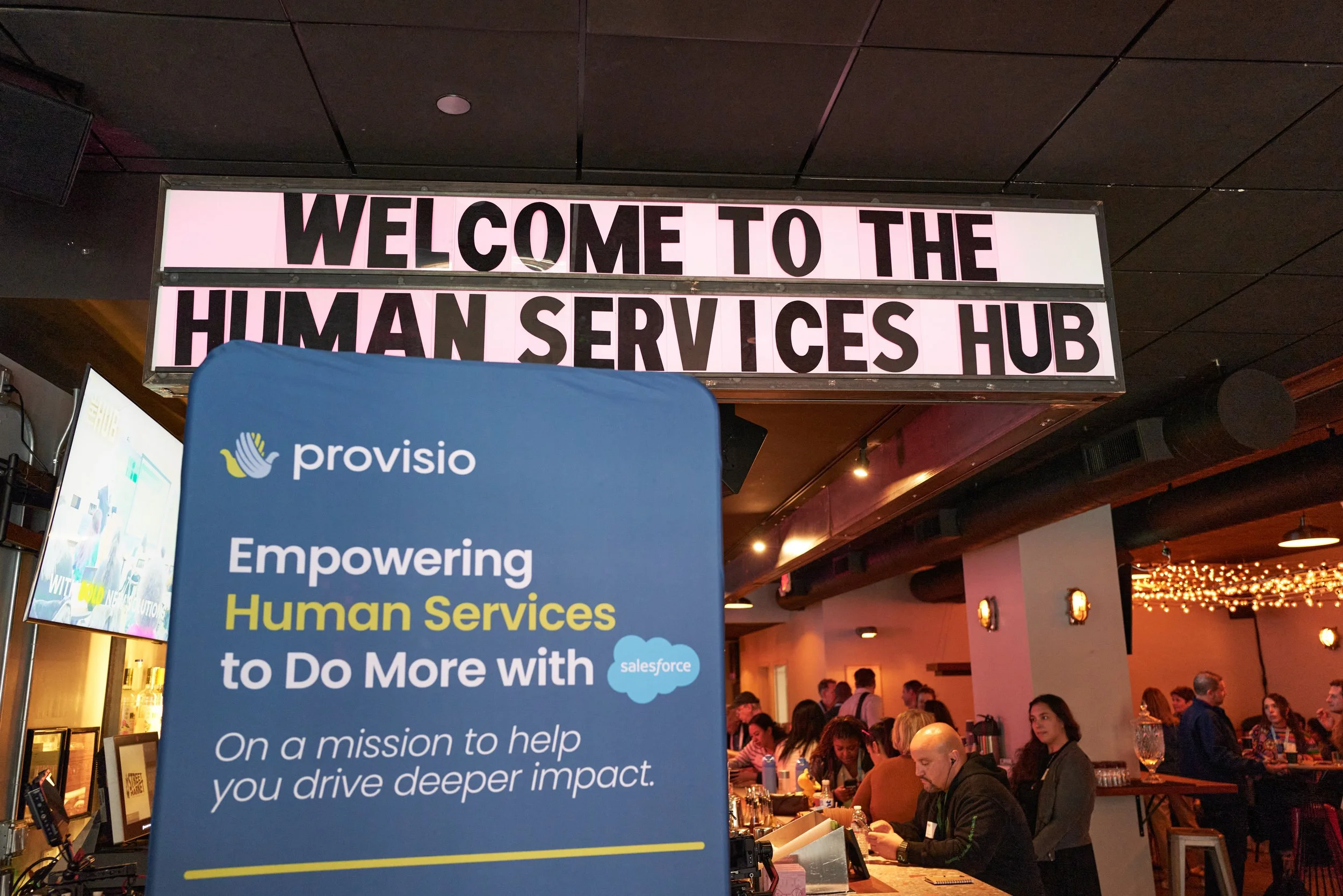
If you walked through the Moscone Center during Dreamforce 2026, you might have gotten the impression that AI is going to solve your organization’s biggest problems overnight like magic. The demos were flashy and the promise of effortless digital transformation was everywhere.
But we know that it’s not that simple, particularly if you work in human services. Even if you get the funding for a big AI implementation, you’re then dealing with unique ethical and logistical concerns that corporations don’t, like sensitive health and wellness data and complex funding requirements. Not to mention, your staff is already at full capacity. Having extra time and bandwidth to experiment with new technology probably feels like a luxury for most nonprofits and government agencies.
The reality is technological change requires organizational change, and the latter must come first. But how do leadership teams approach strategic planning and risk management to meet the demands of successful digital transformation?
At Provisio’s 3rd annual Human Services Hub during Dreamforce, we gathered human services leaders for honest conversations about the human element of innovation. Over 100 nonprofit and public sector leaders joined us at Kona’s Street Market in San Francisco, just a 6-minute walk away from the conference. No badges required, no formal slide presentations. Just an open, practical room for genuine discussion about the future of human services.

"I think there's amazing content provided by the Salesforce team and the customers that present, but I often find in these smaller partner areas—that's where the most honest conversations happen. Smaller groups where you can talk about the things your organization is struggling with."
Lori Freeman, Global GM & VP for Education and Nonprofits at Salesforce
Beyond the Tech: Why Strategy Beats Shiny Objects
Opening the session, Dr. Craig Maki, Chief Strategy Officer at Provisio, addressed the technology fatigue and AI anxiety felt across the human services ecosystem. On the one hand, recent research from McKinsey shows that 90% of organizations still do not see clear ROI from their AI initiatives. Yet, they’re all still rushing to adopt it. As Maki puts it, the AI rush in human services is a lot like tee-ball.
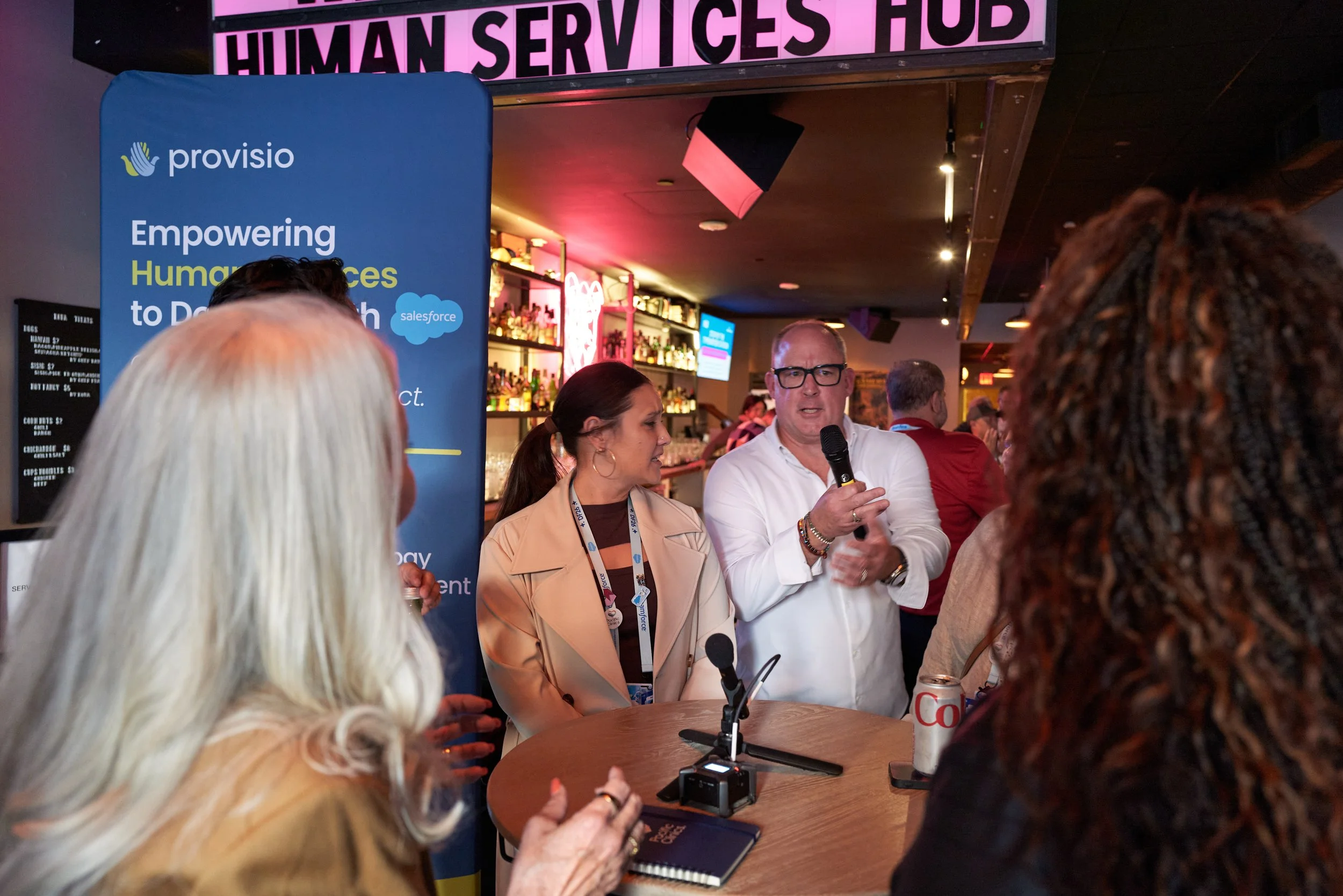
"Where the ball goes, we all go. We're all just following the ball. And that's what we see a lot of right now—everybody's chasing things. There isn't a whole lot of 'why' or 'where', it's just this thing and we're going towards it."
Dr. Craig Maki, Chief Strategy Officer at Provisio
Just like how tee-ball doesn’t have a reputation for great defense because all the kids just scramble toward the ball regardless of where they’re supposed to be on the field, scrambling after the hype of AI without a real plan that aligns with your mission won’t result in real progress.
Freeman also advised leaders to focus on intentional, mission-focused strategy instead of just jumping after the latest shiny object in technology: "It's very, very easy to get distracted by the sparkling new thing or the demos that we see... but the thing that I've seen drive the absolute most impact in this work is coming together around a strategy that's focused on specific outcomes. Incremental bets are what pave the path ahead."
While strategy provides guardrails, it doesn’t eliminate risk. And that’s ok! There’s always a level of risk when adopting new technology like AI. That’s why it’s imperative your organization builds a culture where teams feel safe testing new approaches without the fear of retribution.
According to Blake Johnson, Chief Strategy Officer at Child Action, Inc., a risk-tolerant culture plays a key role in AI strategy.

"The road to success is always under construction. We're okay with failing forward. Making a mistake isn't an indictment on you all... we have this understanding that, ‘Hey, it may not work out, but it's not on you. It's about how we learn together.’"
Blake Johnson, Chief Strategy Officer at Child Action, Inc.
Together, these perspectives laid the foundation for a different type of Dreamforce event; one not focused on hyping up the latest Salesforce product features, but instead on the things you need to do to make those product features work, like developing a measured strategy, clear outcomes, and an environment that tolerates risk and failure.
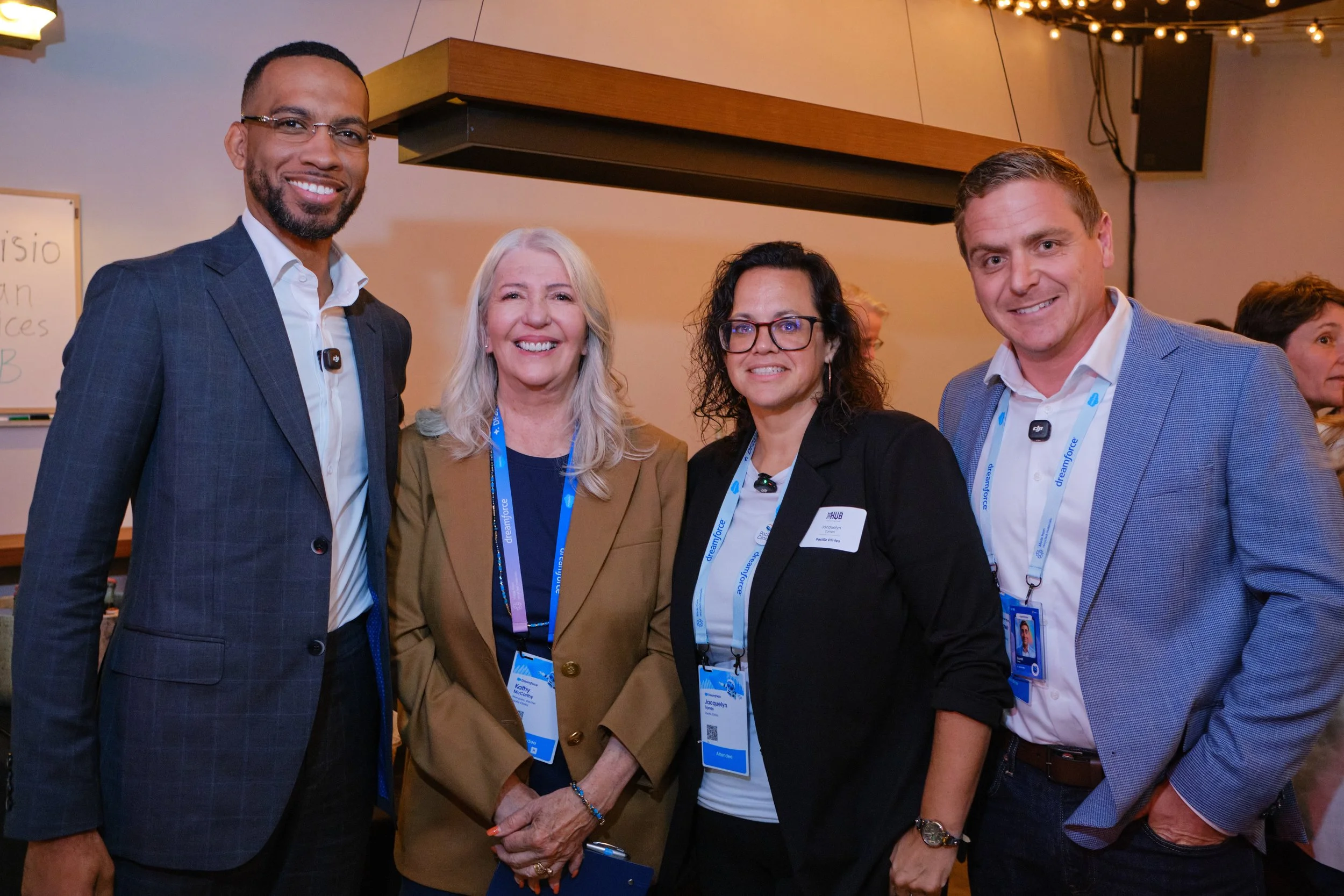
Blake Johnson (Child Action), Kathy McCarthy, Jacquelyn Torres, & Garret Zabel (Pacific Clinics)
Leadership Workshop
Practical perspectives on change, risk, and building teams that can move with confidence.
Rather than hosting a conventional panel where experts just talk at the audience, the Hub turned into an interactive social experiment. Attendees physically moved across the room based on their authentic leadership instincts, exploring how differing approaches to change management and risk tolerance power organizational progress.

The session kicked off with this question: “When leading through transformation, do you prefer to build the plane as you fly it, or do you prefer a structured plan before taking action?”
The room then split into two camps: intuitive builders who would rather figure things out as they go, and structured planners who need clear blueprints before getting started.
The Agility of the Builders: Leaders who favored "building as you fly" pointed out that waiting for 100% certainty in technology guarantees you will be late. They argued that hands-on experimentation, making early mistakes, and adjusting in mid-flight prevent you from being paralyzed by over-analysis so you can discover what actually works.
The Hazards of Moving Without a Blueprint: Meanwhile, those who preferred a structured plan were quick to flag the downside of improvising on the fly. In human services, endless iteration frequently results in scope creep, missed deadlines, and staff burnout. More critically, they noted that agencies handle Protected Health Information (PHI) under strict regulatory and cybersecurity requirements. Moving fast without a plan for compliance can be catastrophic to client safety.
The Takeaway: High-performing teams intentionally take both of these approaches so that bold experimentation can actually get underway in a timely fashion, but within protective guardrails.
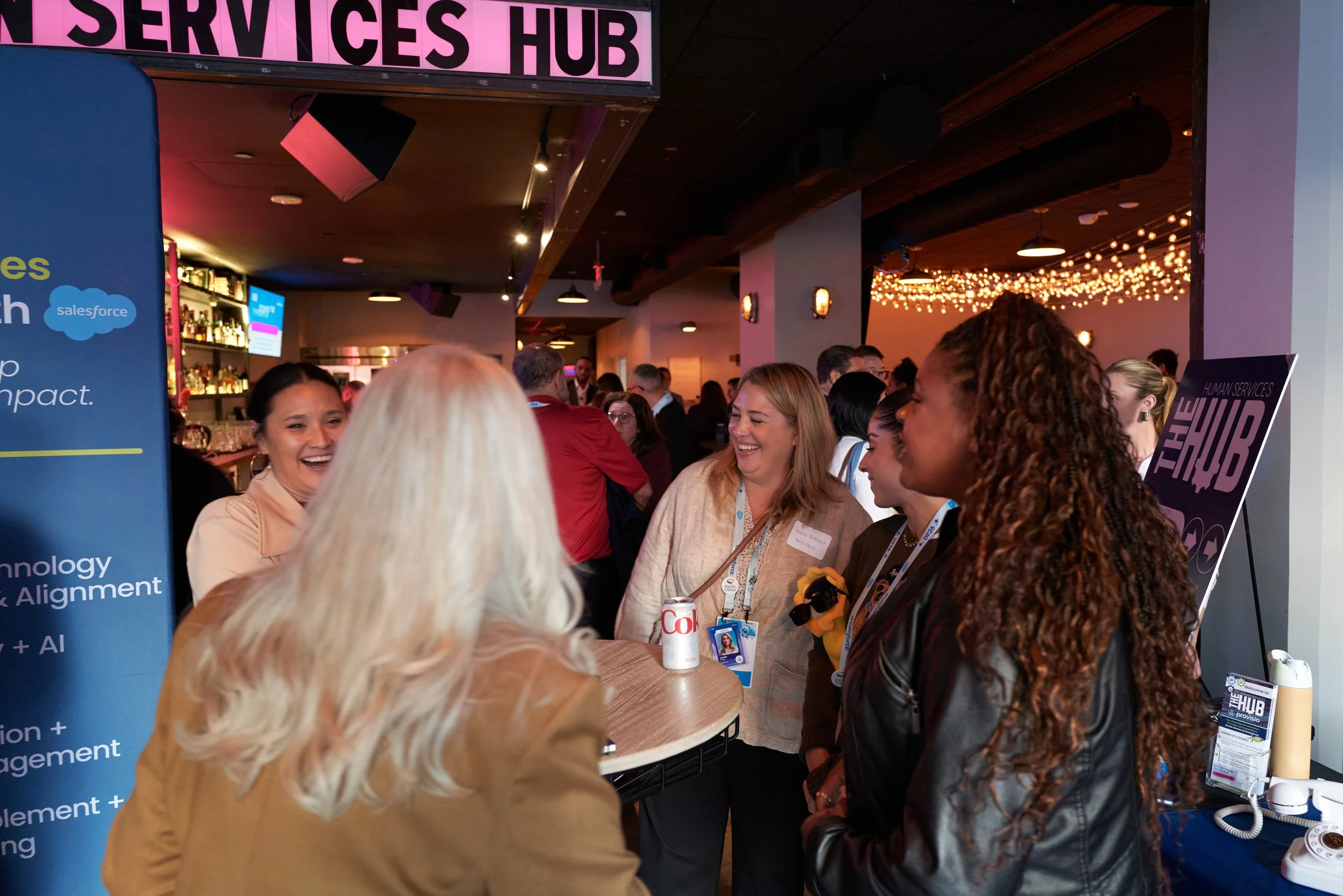
Next, attendees broke into groups to answer this question: “In high-stakes decisions, does your brain instinctively focus on potential gains that justify the risk, or do you initially measure the risk by what you stand to lose?”
When forced to choose whether they approach transformation risk-first or reward-first, the room surfaced a fundamental truth about human services: risk aversion is not a leadership flaw, but a byproduct of working in industries with sensitive data.
The Clinical Roots of Risk-First Thinking: Many agency leaders who worry more about the risk of what they stand to lose come from backgrounds in clinical therapy, crisis response, child welfare, and quality assurance. In those environments, assessing and mitigating worst-case scenarios is essential to keeping vulnerable people alive and well, so it’s natural they would feel that way. That protective mindset naturally carries over into administrative decisions, leading teams to scrutinize every potential pitfall before taking a leap.
The Hidden Risk of Inaction: On the opposite side, attendees acknowledged that avoiding technology adoption out of fear of the unknown carries its own risks. Sticking to legacy tools too long causes programs to lose impact, frustrating staff and reducing the ability to scale to meet changing community needs.
The Takeaway: High-performing teams intentionally balance both perspectives so that agencies can pursue transformative, mission-driven rewards that dismantle bureaucratic barriers for clients while still protecting vulnerable communities. That requires taking calculated, well-supported bets on behalf of the people you serve.

Finally, our featured speakers answered this question about the unvarnished guidance they’d tell their younger selves: “Looking back at your agency's journey over the past one to two years, what single lesson or mistake would you warn your past self about?”
Secure Buy-In Early: Team apprehension isn't an indictment of the vision or a character flaw in employees. They just need to be brought along for the ride so they feel invested. Engaging staff early and turning them into proponents of the change is the only way to ensure lasting adoption.
Relinquish the Pressure to Know Everything: Modernizing technology is too complex for any single executive to solve alone. Leaders urged their peers to drop the burden of having all the answers, surround themselves with trusted subject-matter experts, and let the team lead execution, together.
Accept Incomplete Information as Leadership: You’ll spend much of your career making critical decisions with far less data than you'd like. The goal isn't to have the entire horizon mapped out, but to have enough clarity to move forward responsibly.
Forget Your Old Ways: When pursuing new digital capabilities, relying on old operational habits and workflows will hold you back. Moving toward a new destination requires letting go of past processes, inviting diverse frontline voices into system design, and focusing on just taking "always the next step" when the long-term vision feels overwhelming.
Connecting Mission and Money With Accounting Seed

No matter how robust your leadership team’s technology strategy is, your technological ambition will fall flat without financial stability, which is often a result of a disconnect between program teams, development teams, and finance departments. Speaking on behalf of event sponsor Accounting Seed, Account Executive BJ Hylton stressed that when gift entries, grant contracts, and program metrics live in siloed databases, finance teams spend valuable time just trying to validate numbers and re-key information.
Highlighting a powerful success story, Hylton pointed to the Jewish Community Center of San Francisco (JCCSF). Previously, JCCSF’s accounting software was stuck on an aging, on-premises server, leaving program registration and financial data disconnected. By moving to Accounting Seed natively on Salesforce, JCCSF created a single source of truth that became especially critical for managing the high volume of transactions during their busy holiday seasons and extended closures. The result? A 50% to 60% improvement in accounting efficiency within four months, giving staff critical administrative time back to focus on their community mission.
Navigating Change in the Age of AI
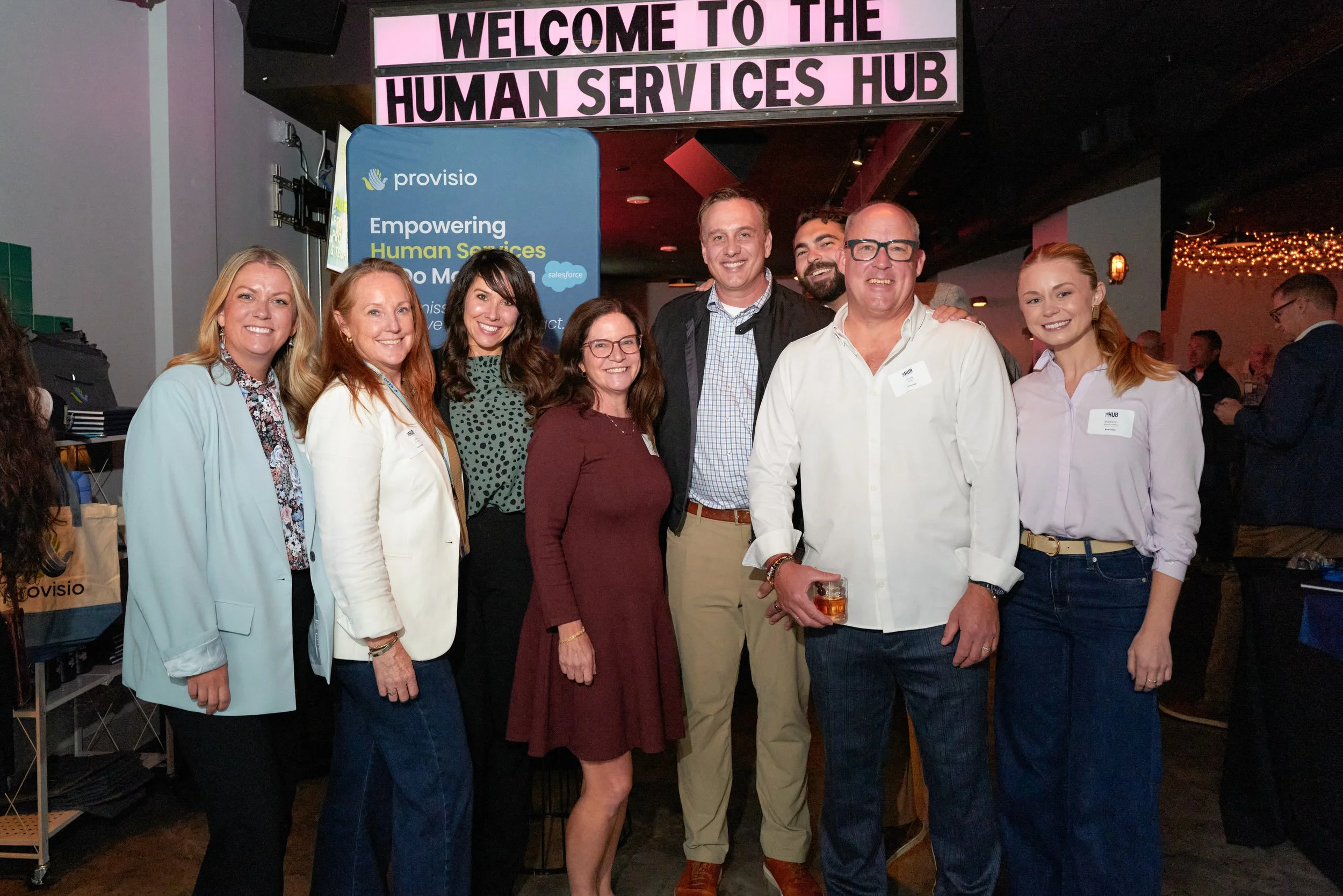
The 2026 Human Services Hub was a resounding success, proving once again what makes this community so exceptional: an unwavering commitment to collaboration, practical innovation, and shared purpose. In an industry often told it lags behind the private sector in technology, the leaders in this room demonstrated the exact opposite. When organizations talk honestly about their challenges and share what is actually working, they actively shape new technology into a force that better serves people without compromising safety.
Whether your agency is setting up its first AI guardrails, modernizing intake workflows, or unifying your financial architecture with frontline programs, lasting digital transformation never starts with the software itself. It begins with an honest assessment of your team’s operational readiness, risk tolerance, and a grounded strategy built around specific outcomes.
You don’t have to navigate that journey alone. Don’t rush into high-stakes technology shifts without an experienced guide who understands the unique compliance, culture, and care realities of mission-driven organizations. Provisio is here to be that partner.
Special thank you to our brilliant partners for participating:
Mike Anderer, Chief Administrative Officer, Urban Alchemy
Michele Scott, Data Quality & Compliance Specialist, Urban Alchemy
Blake Johnson, Chief Strategy Officer, Child Action, Inc.
Kathy McCarthy, CEO, Pacific Clinics
Jacquelyn Torres, SVP of Emerging & Statewide Services, Pacific Clinics
Garret Zabel, VP, Healthcare Business, Pacific Clinics
Rachelle Grant, Executive Director, Integrated Care & CalAIM, Pacific Clinics
Lori Freeman, Global GM & VP, Impact, Salesforce for Education and Nonprofits, Salesforce
And thanks again to our sponsors Accounting Seed and Mogli!
Frequently Asked Questions (FAQ)
-
Recent McKinsey research shows that 90% of organizations have yet to realize clear ROI from their AI and agentic initiatives. As Provisio’s Craig Maki explained, many organizations succumb to "tee-ball adoption"—scrambling after new tools simply because everyone else is chasing them, rather than anchoring technology in a clear operational purpose. Without clean underlying data, adequate staff bandwidth, and a strategy focused on incremental bets and measurable outcomes, AI implementations quickly stall into expensive experiments.
-
Unlike private enterprises, human services agencies manage sensitive Protected Health Information (PHI) and serve vulnerable communities under strict regulatory, HIPAA, and grant compliance requirements. Moving too quickly without governance can compromise client safety and community trust. However, avoiding modern technology out of fear carries its own hazard: relying on outdated, manual processes causes program impact to atrophy, frustrates caseworkers, and limits an agency's ability to scale.
-
Sustainable change begins with building psychological safety across frontline teams. As Child Action’s Blake Johnson shared, leaders must foster a culture of "failing forward," reassuring staff that early bumps in adoption are shared learning opportunities rather than personal indictments. Involving frontline staff early as co-designers of new workflows—and intentionally pairing fast-moving "builders" with structured "planners"—ensures that teams feel invested and protected throughout the process.
-
Commercial companies often adopt artificial intelligence to maximize profit margins, drive marketing conversions, or accelerate product cycles. In contrast, human services agencies handle highly sensitive Protected Health Information (PHI) and serve vulnerable communities under stringent regulatory, ethical, and grant-reporting mandates. Furthermore, agency caseworkers and administrative teams are already operating at full capacity. Technology implementations cannot simply "move fast and break things" when a system error or data vulnerability directly impacts client safety, trust, and service access.
-
Before purchasing software licenses or signing vendor agreements, leadership teams should conduct an operational capacity audit and a data readiness assessment. These evaluations benchmark your team's baseline data architecture, assess frontline workload capacity, and define the specific community outcomes your technology strategy is designed to achieve.
