Your programs run on data. It's time your data worked for your programs.
We implement Salesforce for housing nonprofits, housing authorities, shelter operators, and Continuum of Care organizations — connecting case management, HUD compliance, coordinated entry, and real-time reporting in a single platform.
Built for the entire housing response ecosystem
Housing and homelessness response isn't a single organization — it's a network. We serve every layer of it, from emergency shelter intake to permanent supportive housing and the CoC infrastructure that connects them.
Housing Nonprofits
Rapid rehousing, permanent supportive housing, transitional housing programs, and housing stabilization services managing complex client caseloads and funder reporting.
Housing Authorities (PHAs)
Public Housing Authorities managing Section 8 vouchers, public housing units, HUD compliance, waitlists, and inter-agency coordination with CoC partners.
Shelter Network Managers
Emergency shelters, overflow shelters, family shelters, and domestic violence shelters managing nightly bed counts, enrollments, shift handoffs, and diversion referrals.
Continuum of Care (CoC) Leads
CoC collaborative applicants coordinating member agencies, HMIS administration, coordinated entry systems, HUD grant reporting, and system-level performance measurement.
CoC Member Agencies
Subrecipient organizations participating in CoC programs needing case management, service documentation, and HUD reporting without replacing their mandated HMIS.
Coordinated Entry Administrators
CES administrators managing VI-SPDAT assessments, prioritization lists, referrals to housing programs, and outcome tracking across the entire shelter and housing system.
The systems weren't designed for the work you're actually doing
Most housing and shelter technology was built around funder compliance — not around the people entering data, managing caseloads, or trying to prevent a client from falling back into homelessness.
That statistic is highly accurate; national data from the U.S. Department of Housing and Urban Development (HUD) indicates that roughly 15% to 20% of individuals who exit homeless systems to a permanent housing destination return to homelessness within two years.
US Department of Housing and Urban Development
Salesforce, configured for the full housing and shelter continuum
We don't adapt a generic CRM to housing. We build on Salesforce with HUD data standards, HMIS architecture, and program-specific workflows at the foundation — from day one.
HMIS Replacement & Integration
Replace or integrate your Homeless Management Information System with a purpose-built Salesforce platform. Full HUD data element compliance, client deduplication, and bed-level tracking — all inside Salesforce.
HUD Reporting Automation
Automate APR, CAPER, and system performance measure reporting. Pre-built report templates configured to your programs and maintained as HUD data standards evolve. What used to take two weeks takes an afternoon.
Coordinated Entry System (CES)
Unified coordinated entry platform with VI-SPDAT and assessment tooling, by-name list management, real-time prioritization, referral workflows, and housing match tracking across all participating agencies.
Case Management & Service Plans
Structured client records, goal-based service plans, needs assessments, outcome tracking, and inter-program referrals. Case managers get a single view of the client — from first contact to stable housing.
Shelter Operations Management
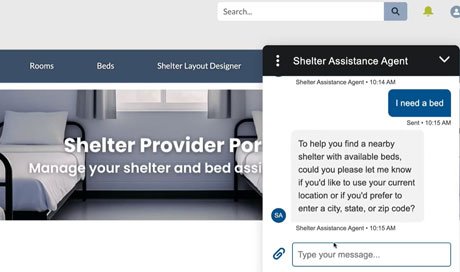
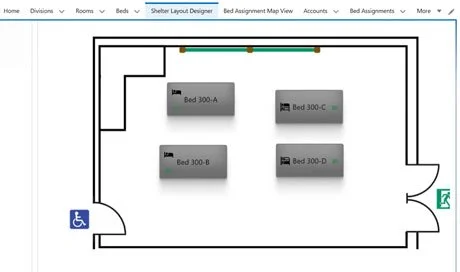
Daily enrollment, bed inventory and assignment, waitlist management, shift handoff notes, incident logging, and overnight census reporting — all in one place. Reduce the burden on overnight staff while improving data quality.
Real-Time Performance Dashboards
Leadership dashboards showing system performance measures, housing placement rates, returns to homelessness, average length of stay, and program occupancy — refreshed in real time, not at reporting deadlines.
Multi-Agency Data Sharing
Salesforce Experience Cloud portals connecting CoC collaborative members, subrecipients, and partner agencies with appropriate data access, referral workflows, and reporting — without giving everyone access to everything.
Grant & Compliance Management
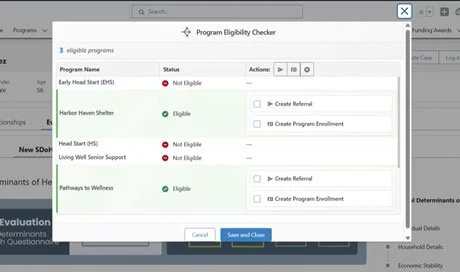
Track CoC, ESG, HOPWA, and HUD-VASH grant activities, expenditures, match requirements, and client eligibility in one system. Automated compliance alerts and audit-ready documentation reduce risk at every grant cycle.
A delivery process designed to eliminate the risks that sink implementations
Most Salesforce implementations fail for predictable reasons. Our process is structured specifically around those failure points — from the first discovery conversation through post-launch stabilization.
Discovery & Organizational Readiness
We map your programs, data flows, funder requirements, and team workflows. We interview case managers, program directors, and data administrators. We document everything — and read it back to you for confirmation before any work starts. No surprises downstream.
Solution Architecture & Fixed-Fee Scoping
We design your Salesforce architecture — data model, reporting structure, integration points, user experience. You receive a fixed-fee scope of work before any implementation begins. Scope creep is not in our vocabulary.
Phased Implementation (Crawl, Walk, Run)
We build in phases that deliver real value quickly. Core system first, then reporting, then advanced automation and integrations. Your team builds confidence and adoption grows naturally — rather than facing a big-bang go-live.
Training & Change Management
Role-specific training for case managers, shelter staff, program managers, and leadership. We document your configuration in plain language, not just Salesforce help articles. Staff adoption is tracked, not assumed.
Go-Live, Hypercare & Ongoing Support
We stay post-launch. Hypercare support during the first weeks is standard — not a paid add-on. After stabilization, managed services keep your system current as HUD data standards change and your programs evolve.
ADD: HUD Compliance Coverage
Start where you need to. Expand when you're ready.
Each module addresses a distinct operational problem. They share a common Salesforce architecture, so adding a second module later is straightforward — no rebuild required.
Sector fluency is what separates a good implementation from a failed one
Generic Salesforce expertise isn't enough in this space. Housing and shelter organizations need a partner who understands HUD regulations, HMIS data architecture, and the operational realities of a CoC — before the first configuration decision is made.
Deep housing sector fluency, not generic nonprofit experience
We understand HUD program types, HMIS data element requirements, CoC governance structures, subrecipient funding relationships, and what case managers deal with on a daily basis. That context shapes every architectural decision we make — and prevents the implementation mistakes that come from guessing.
You know the price before we build anything
After a structured discovery process, we issue a written scope and fixed fee. You review it, confirm it reflects what you actually need, and sign off before a single configuration is written. Change orders aren't how we operate — we get the scope right at the start.
Incremental delivery that turns users into advocates
Rather than building everything in a black box and handing over a finished system, we deliver in phases that put working tools in your team's hands early. Staff build real familiarity over weeks, not hours. By go-live, the system isn't new — it's already familiar.
We don't hand off documentation and disappear
Launch day is the beginning of the most critical period, not the end of our engagement. We provide active post-launch support through a structured stabilization period — resolving real-world issues as they emerge rather than waiting for a support ticket queue to catch up.
Experience across the full social services landscape
With implementations across housing, behavioral health, workforce development, and community services, we bring cross-sector patterns to problems that rarely fit neatly inside one program type. Housing clients often benefit from approaches we've refined in adjacent sectors.
Your compliance posture improves as HUD evolves
HUD updates its data standards periodically. Program requirements shift. Our managed services clients receive proactive configuration updates when the regulatory environment changes — so compliance doesn't depend on your team catching every HUD notice and translating it into system changes.
Questions we hear from housing organizations
Clear answers to the things housing nonprofits, CoCs, and shelter operators ask us most.
-
Not at all. Member agencies operating within a CoC-mandated HMIS can use our Care360, Report360, and Shelter360 modules without touching the system their CoC requires. These modules add the operational and case management layer your team needs while sitting alongside your existing HMIS. Replacing an HMIS is only relevant if your organization is a CoC lead exploring a full platform migration — that's what Housing360 is designed for.
-
Data migration is scoped and executed as a core deliverable of the implementation — not an afterthought. We map your historical records, enrollment data, and program history to the Salesforce data architecture, run parallel systems through a validation period, and confirm accuracy before decommissioning the legacy system. Your client history travels with you.
-
We track HUD HMIS Data Standards releases and translate regulatory updates into configuration changes for our clients. When HUD revises data element requirements or reporting templates, those changes are pushed to your system as part of your ongoing service agreement — you don't need to monitor federal notices or manage technical changes internally.
-
Failed housing implementations typically share a predictable set of root causes: a consulting partner with no housing sector knowledge, requirements that were never properly documented, optimistic timelines with no phased delivery, and a go-live that asked staff to adopt a fully new system overnight. Our process is built specifically to address each of those failure points — through structured discovery, written scope confirmation, incremental delivery, and active post-launch stabilization support. Sector expertise is the starting point, not an afterthought.
-
Absolutely. Each of our modules — Care360, Report360, Shelter360 — is a complete, standalone solution built on a shared Salesforce architecture. Many clients begin with the module that solves their most pressing problem, then expand as their team builds familiarity and appetite for more. Starting with one module is a practical strategy, not a compromise.
-
It depends on scope and organizational complexity. A focused single-module deployment typically runs 8–14 weeks. A full CoC platform implementation with data migration, multi-agency configuration, coordinated entry setup, and HUD reporting automation generally runs 16–28 weeks. We provide precise timelines after discovery — not before — because that's when we actually understand the scope.
-
es. We have integration experience with leading HMIS platforms including Bitfocus Clarity Human Services and ServicePoint, as well as ETO (Efforts to Outcomes), DocuSign for program agreements, financial and payment systems, and state housing databases. Integration requirements are identified during discovery and included in the fixed-fee scope of work.
Let's talk about what your organization actually needs.
No generic demos. No pre-packaged slides. We start with a real conversation about your programs, your data challenges, and what a Salesforce platform built for your specific context would look like in practice.