
Data silos are one of the biggest barriers to effective decision-making in growing organizations. When teams rely on disconnected platforms for fundraising, case management, marketing, finance, operations, and reporting, information becomes fragmented, duplicated, and difficult to trust. The result is messy reporting, inconsistent records, wasted staff time, and limited visibility across the organization.
That is where data synchronization becomes essential.
A strong data synchronization strategy helps large organizations connect systems, align records, and maintain accurate information across departments. Instead of forcing teams to work from separate versions of the truth, synchronization creates a more unified data environment where people can report confidently, govern data more effectively, and operate with greater efficiency.
For nonprofits and government organizations in particular, the ability to coordinate information across multiple tools is critical. Whether the goal is stronger donor reporting, more complete client records, improved compliance, or cleaner Salesforce dashboards, the right data synchronization tool can make a major difference.
What Are Data Silos, and Why Do They Create So Many Problems?
Data silos happen when information is stored in separate systems that do not communicate well with one another. Each department may have the tools it needs to do its job, but without shared data flows, the organization as a whole loses visibility.
Common examples of siloed systems include:
A CRM that does not sync with marketing automation
A case management platform that is disconnected from reporting tools
Operations systems that are not aligned with fundraising data
Finance records that cannot be easily compared with program performance data
Spreadsheets used to manually fill gaps between systems
When these silos exist, organizations often face the same set of challenges:
Duplicate and conflicting records
Manual data entry across teams
Delayed reporting cycles
Poor Salesforce data quality
Limited governance and oversight
Difficulty measuring organization-wide performance
Reduced trust in dashboards and analytics
Over time, these issues do more than slow work down. They make strategic planning harder, weaken reporting accuracy, and create unnecessary friction between teams that should be collaborating.
How Data Synchronization Works Across Large Organizational Systems
At its core, data synchronization is the process of moving and aligning information between two or more systems so the right data stays current in the right places.

Rather than requiring staff to manually update multiple platforms, synchronization automates the exchange of records, fields, and updates. Depending on the business need, this can include:
One-way syncs that push data from one system into another
Two-way syncs that keep records aligned across platforms
Scheduled syncs that update data at defined intervals
Real-time syncs for high-priority workflows
Rule-based logic that determines which system controls specific fields
In a large organizational environment, salesforce data synchronization often serves as a central part of the architecture. Salesforce may act as the CRM and reporting hub, while data is pulled from or shared with:
Marketing platforms
Case management systems
Intake and enrollment tools
ERP or finance software
Business intelligence platforms
Volunteer management systems
Program databases
Custom applications
When synchronization is implemented well, teams no longer operate in isolation. Instead, systems become connected through consistent, governed data flows.
How Data Synchronization Helps Eliminate Messy Data Silos
The biggest value of data synchronization is not just convenience. It is organizational alignment. It helps eliminate the structural causes of data silos by creating a shared, governed flow of information across teams.
1. It Connects Teams Through Shared Data
When departments use different platforms, it is easy for each team to develop its own records, terminology, and processes. Synchronization creates continuity by making sure key information moves across systems in a consistent way.
For example:
Development can see marketing engagement data in Salesforce
Program teams can reference service interactions without leaving their primary platform
Leadership can access consolidated reports instead of comparing spreadsheets from multiple departments
This creates stronger collaboration and a more reliable view of organizational performance.
2. It Reduces Duplicate Data Entry
One of the most common causes of messy data silos is repeated manual entry. Staff members often retype the same constituent, donor, client, or case information into multiple systems because those platforms are not connected.
A well-designed data synchronization tool reduces that burden by automatically moving approved data between systems. This helps organizations:
Save staff time
Minimize human error
Improve record consistency
Reduce administrative overhead
3. It Improves Data Quality Across Systems
Silos often lead to conflicting information. One system may show an outdated email address, another may contain incomplete program data, and a third may list a different owner or status.
Salesforce data synchronization can improve data quality by establishing rules for how records are matched, updated, and validated. With the right synchronization strategy, organizations can better maintain:
Clean contact and account records
Accurate service or program histories
Reliable campaign attribution
Consistent custom object data
More complete reporting fields
4. It Supports Better Reporting and Governance
Disconnected systems make governance much harder. It becomes difficult to know which platform is the source of truth, which fields are trustworthy, and whether teams are using consistent logic.
A strong data synchronization framework helps governance by clarifying:
Which system owns each type of data
How field values are mapped
When records should sync
What validation or transformation rules apply
How exceptions and sync failures are handled
This structure is especially important for organizations that depend on Salesforce for executive reporting, compliance oversight, or funder reporting.
5. It Creates a More Complete View of the Organization
Most leaders do not need more data. They need more complete and trustworthy context.
By connecting siloed systems, data synchronization enables a fuller operational picture. Instead of viewing development, program delivery, outreach, and operations as separate data streams, leadership can analyze how they influence one another.
That visibility helps organizations answer bigger questions, such as:
Which outreach channels lead to stronger long-term engagement?
How do service outcomes connect with funding trends?
Where are handoff gaps occurring between teams?
Which programs need more operational support?
What indicators should appear in executive dashboards?
What to Look for in a Data Synchronization Tool
Not every data synchronization tool is built for the same complexity, governance needs, or reporting requirements. Choosing the right solution requires more than comparing feature lists.
Here are some of the most important things to look for.
Flexible Integration Capabilities
A good data synchronization tool should connect Salesforce with the systems your teams actually use. That may include marketing platforms, case management systems, accounting tools, data warehouses, or reporting applications.
Look for a solution that can support:
API-based integrations
Custom field mapping
Multiple endpoints and systems
Both one-way and bi-directional sync options
Strong Data Mapping and Transformation Features
Raw system connections are not enough. Data often needs to be cleaned, transformed, standardized, or restructured before it can be useful across platforms.
Choose a data synchronization tool that can handle:
Field mapping across different systems
Data normalization
Record matching rules
Duplicate prevention logic
Conditional sync rules
Governance and Error Handling
For Salesforce reporting and governance, control matters as much as connectivity.
The right data synchronization tool should help you monitor sync health and maintain accountability through features such as:
Sync logs and audit trails
Error alerts and exception handling
Role-based access controls
Clear source-of-truth rules
Conflict resolution settings
Scalability for Organizational Growth
A solution that works for one team today may not support enterprise-wide needs tomorrow. As your organization grows, your sync strategy should scale with it.
Look for a data synchronization tool that can support:
Larger data volumes
More systems over time
Complex workflows
Changing reporting requirements
Expansion across departments or programs
Salesforce Compatibility and Reporting Support
If Salesforce is central to your operations, make sure the platform is designed to support reliable salesforce data synchronization. The tool should align with your reporting structure, object model, governance standards, and data quality goals.
The best solutions do not just move data. They help make Salesforce more trustworthy and more useful.
Why Salesforce Data Synchronization Matters for Reporting
For many organizations, Salesforce sits at the center of reporting strategy. It often becomes the platform where leadership, operations, development, and program teams expect to see accurate dashboards and trusted KPIs.
But Salesforce reporting is only as good as the data inside it.
If critical information is trapped in external systems, dashboards become incomplete. If sync processes are inconsistent, reporting becomes unreliable. That is why salesforce data synchronization is so important for organizations that depend on Salesforce for governance and decision-making.
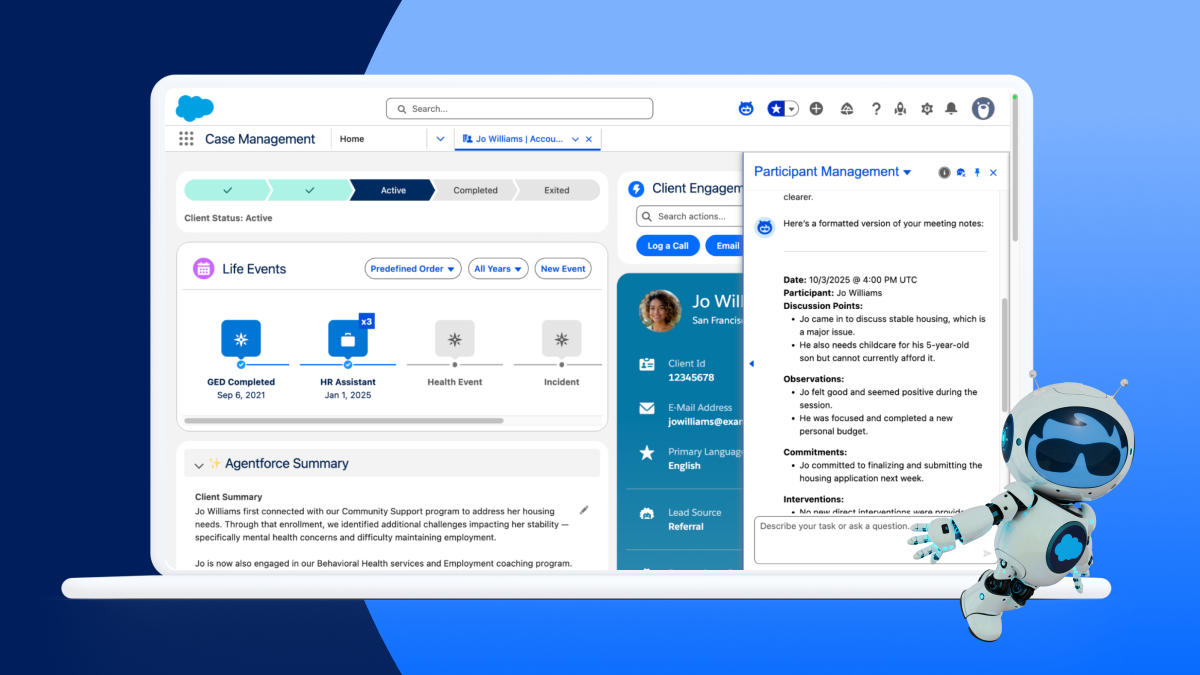
Effective synchronization helps Salesforce reporting by:
Bringing external system data into a central reporting environment
Keeping key fields current without manual imports
Improving visibility into cross-functional activity
Supporting more accurate dashboards and segmentation
Reducing reporting delays caused by manual reconciliation
When Salesforce is backed by strong synchronization and governance, it becomes far more useful as a true system of insight rather than just a data repository.
Common Use Cases for Data Synchronization in Nonprofit and Human Services Organizations
For nonprofit and human services organizations, siloed data can directly affect service delivery, fundraising performance, compliance, and reporting. Data synchronization is especially valuable in environments where multiple teams need access to connected records and timely information.
Common use cases include:
Synchronizing CRM and case management systems
Connecting donor data with marketing platforms
Aligning online intake forms with service records
Feeding operational and program data into reporting systems
Maintaining consistent constituent information across departments
Supporting grant reporting with cleaner cross-system data
In these contexts, synchronization helps organizations operate more intelligently while reducing administrative friction for already stretched teams.
How Provisio Helps Organizations Unify Systems and Data
At Provisio, we help organizations move beyond disconnected systems and fragmented reporting. Our systems integrations services are designed to help nonprofits and government organizations unify their tools and data sources so they can operate more intelligently and efficiently.
As experienced CRM system integrators, we specialize in building seamless system integrations that connect your CRM platform with marketing, operations, case management, and reporting systems. The goal is not just connectivity for its own sake. It is to create a more usable, governed, and actionable data environment.
Our work helps organizations:
Break down data silos across departments
Improve reporting consistency and visibility
Strengthen data governance
Reduce manual work
Create a more reliable single source of truth
Unlock more value from Salesforce and connected systems
Whether your organization needs better reporting, cleaner data flows, or a more integrated operational model, our team can help design and implement the right approach for your environment.

Why This Matters for Nonprofit and Human Services Organizations
Nonprofits and human services organizations often face some of the most complex data environments. Teams may need to manage donor relationships, program delivery, case activity, compliance reporting, and community outcomes across several systems at once.
That complexity makes data synchronization especially valuable.
The right synchronization approach can help these organizations:
Improve service coordination
Reduce administrative burden
Produce stronger grant and board reporting
Support staff with better system visibility
Create more confidence in organizational data
When systems are aligned, organizations can spend less time managing disconnected data and more time advancing their mission.
Build a Connected Data Environment With Provisio
Messy data silos slow organizations down, weaken reporting, and make it harder for teams to act with confidence. A strong data synchronization strategy helps solve these problems by connecting systems, improving data quality, and supporting clearer governance across the organization.
With the right data synchronization tool and the right implementation approach, salesforce data synchronization can transform Salesforce into a more complete, trustworthy hub for reporting and decision-making.
If your nonprofit or government organization is struggling with disconnected systems, incomplete reporting, or inconsistent data across teams, now is the time to address it. Contact Provisio to chat with a consultant and learn how our system integration services can help your organization unify its tools, eliminate silos, and operate more intelligently and efficiently.
FAQs
-
Data synchronization is the process of automatically keeping data consistent across two or more systems. It helps organizations ensure that updates made in one platform are reflected in another, reducing manual work and improving data accuracy.
-
The right sync frequency depends on the organization’s workflows, reporting needs, and system requirements. Some organizations need real-time updates, while others can rely on hourly, daily, or scheduled batch syncs.
-
Data synchronization can connect many types of systems, including CRMs, marketing platforms, case management tools, finance software, reporting platforms, and custom applications. The goal is to create a more unified flow of information across the organization.
-
Yes, salesforce data synchronization is especially useful for nonprofits and human services organizations that rely on multiple systems for case management, fundraising, outreach, and operations. It helps unify critical information so teams can make better decisions and serve constituents more effectively.
